

Lead Assignment Automation: How to Distribute Leads Without Manual Work
31 Oct, 2026
Summary Lead Assignment Software helps businesses automatically distribute incoming leads...
Updated: 31st October, 2026
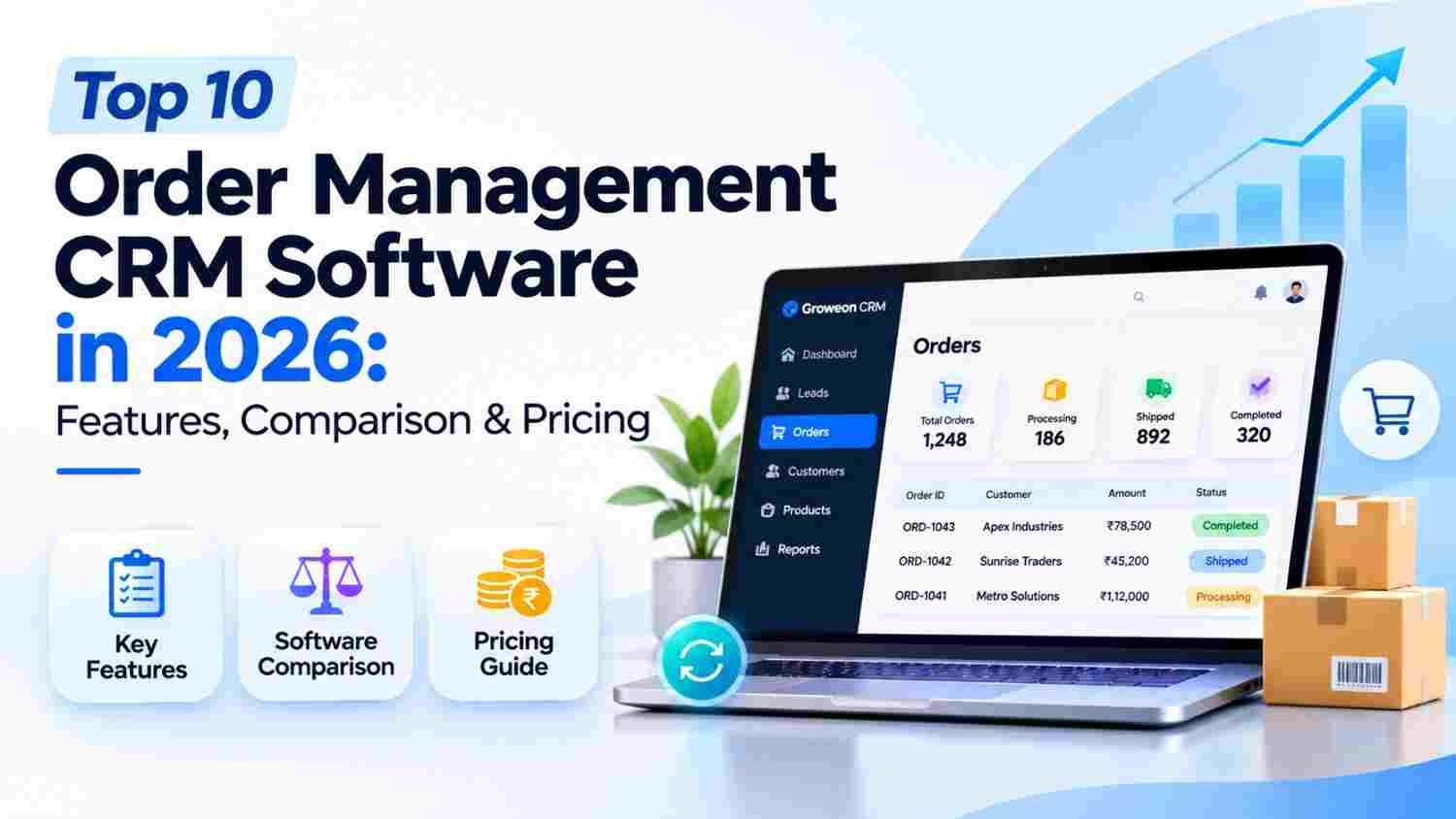
As businesses grow, managing orders through spreadsheets, emails, and separate applications becomes increasingly difficult. Sales teams need order status updates, warehouse teams need accurate stock information, and accounts teams need reliable invoicing and payment records.
Order Management CRM software connects these activities through a more organised workflow. It helps businesses record customer orders, validate details, check inventory, coordinate dispatch, and monitor delivery progress.
For example, a distributor receiving orders from sales representatives can record an order, verify product availability, coordinate fulfilment, and track delivery through a connected system.
Businesses can explore IBM order management, Oracle order management, and Microsoft Dynamics to understand different approaches to order processing and enterprise operations.
A suitable Groweon order solution can also be evaluated by businesses seeking to connect order capture, inventory, processing, dispatch, and customer updates.
The following comparison covers software for small businesses, growing distributors, ecommerce sellers, manufacturers, and large enterprises. This is a practical shortlist based on use cases, not a universal performance ranking.
| Software | Best For | Key Strengths |
|---|---|---|
| 1. Groweon | Indian SMBs and growing businesses | Connected sales, inventory, and order workflows |
| 2. Zoho Inventory | Small and medium businesses | Stock and order processing |
| 3. Odoo | Businesses needing modular applications | Sales, inventory, and purchasing |
| 4. Oracle NetSuite | Mid-sized and large enterprises | ERP-connected order management |
| 5. SAP | Complex enterprise operations | Supply chain and business processes |
| 6. Microsoft Dynamics 365 | Microsoft-oriented businesses | Connected sales, finance, and operations |
| 7. Salesforce Order Management | Commerce-focused businesses | Order fulfilment and customer visibility |
| 8. Cin7 | Wholesalers and multichannel sellers | Inventory and order coordination |
| 9. Unicommerce | Ecommerce and marketplace sellers | Multichannel order fulfilment |
| 10. Fishbowl | Warehouse and manufacturing businesses | Inventory and fulfilment workflows |
Groweon offers an order management solution designed to help businesses coordinate order capture, processing, inventory, purchasing, dispatch, and delivery. It is worth evaluating for Indian SMBs, distributors, manufacturers, and growing companies that want to manage these activities through a connected workflow.
Groweon can be considered by businesses looking to reduce disconnected records and improve coordination between sales, warehouse, accounts, and dispatch teams.
Pricing: Groweon’s published pricing lists its Order Management Solution at ₹999 per user per month, billed annually, plus GST. Confirm the latest pricing, included features, and implementation requirements before purchasing.
Explore Groweon order management to review the product and request a demo.
Zoho Inventory helps product-based businesses manage sales orders, purchase orders, stock, and fulfilment activities. It can suit growing companies looking for a cloud-based inventory and order management system.
Businesses already using Zoho applications may benefit from evaluating its wider ecosystem.
Pricing: Zoho offers multiple subscription tiers, with availability and prices varying by market. Check its current Zoho pricing for plan limits and features.
Odoo offers modular applications for sales, inventory, purchasing, accounting, and other business processes. Companies can start with the applications they need and expand as operations become more complex.
Odoo can suit businesses seeking flexibility, although configuration and customisation requirements should be evaluated before implementation.
Pricing: Odoo provides different subscription options, including a one-app free option and paid plans. Review Odoo pricing for current terms.
Oracle NetSuite is an ERP platform with order management, inventory, finance, and operational capabilities. It is designed for organisations that need connected processes across departments and locations.
NetSuite is worth considering when order management needs to work closely with finance and wider business operations.
Pricing: NetSuite generally uses customised pricing based on licensing, modules, users, and implementation scope. Request a quote through NetSuite order tools.
SAP provides enterprise applications for organisations managing complex sales, supply chain, inventory, and fulfilment processes. Available capabilities depend on the selected products and configuration.
SAP may suit large organisations with multiple business units and complicated operating procedures. Implementation generally requires careful planning and technical expertise.
Pricing: Costs depend on selected products, licensing, deployment, and implementation. Explore SAP business solutions for product details.
Microsoft Dynamics 365 provides business applications covering sales, finance, supply chain, and other operational requirements. Businesses can select the relevant products to support their order and fulfilment workflows.
Businesses already using Microsoft tools may find the ecosystem worth evaluating. Confirm the required modules before comparing costs.
Pricing: Subscription costs depend on selected products, licences, and implementation requirements. Review Dynamics 365 products.
Salesforce Order Management supports order processing and fulfilment in commerce environments. It may suit organisations that need order information connected with customer service and their wider Salesforce ecosystem.
Its suitability depends on sales channels, fulfilment complexity, and existing Salesforce applications.
Pricing: Costs depend on the selected products, usage, and implementation scope. Explore Salesforce order management.
Cin7 focuses on inventory and order workflows for product-based businesses. It may suit wholesalers, distributors, and brands selling through multiple channels.
Businesses should check supported channels, order limits, integrations, and warehouse requirements before selecting a plan.
Pricing: Cin7 offers product-specific plans. Check Cin7 pricing for current prices and included features.
Unicommerce focuses on ecommerce operations, including multichannel order processing, inventory coordination, and fulfilment. It can suit online sellers handling orders from multiple marketplaces and sales channels.
Businesses should assess marketplace integrations, order volumes, warehouse processes, and returns workflows before selecting a solution.
Pricing: Costs depend on services, transaction volumes, and business requirements. Request a quote through Unicommerce solutions.
Fishbowl provides inventory and warehouse capabilities for businesses that need detailed control over stock and fulfilment. Depending on the selected product, it can also support manufacturing-related workflows.
Fishbowl is worth evaluating when warehouse accuracy and inventory control are major operational priorities.
Pricing: Costs vary by product, deployment, licensing, and support requirements. Explore Fishbowl inventory for current information.
The table below compares typical areas of focus. Actual functionality depends on the selected product, plan, and configuration.
| Software | Order Processing | Inventory Connection | Main Consideration |
|---|---|---|---|
| Groweon | Order workflow management | Connected inventory workflows | Indian business operations |
| Zoho Inventory | Sales and purchase orders | Core inventory features | Plan limits and integrations |
| Odoo | Sales and purchasing workflows | Warehouse and stock management | Configuration and customisation |
| Oracle NetSuite | Enterprise order management | ERP-connected inventory | Implementation and total cost |
| SAP | Enterprise processes | Supply chain integration | Technical complexity |
| Microsoft Dynamics 365 | Connected business workflows | Supply chain capabilities | Licensing and modules |
| Salesforce | Commerce order workflows | Depends on connected systems | Commerce and service needs |
| Cin7 | Multichannel orders | Inventory coordination | Channel integrations |
| Unicommerce | Ecommerce order processing | Multichannel inventory | Marketplace coverage |
| Fishbowl | Warehouse and fulfilment workflows | Inventory-focused | Deployment and integrations |
Pricing differs considerably between platforms. Some vendors publish subscription prices, while enterprise solutions generally require a customised quote. The table provides a starting point for evaluation rather than a direct like-for-like cost comparison.
| Software | Pricing Approach | What to Verify |
|---|---|---|
| Groweon | ₹999/user/month, billed annually, plus GST | Included modules and setup |
| Zoho Inventory | Tiered subscription plans | Regional prices and order limits |
| Odoo | Free one-app option and paid plans | Hosting and configuration |
| Oracle NetSuite | Quote-based | ERP modules and implementation |
| SAP | Product-specific pricing | Licensing and deployment |
| Microsoft Dynamics 365 | Product-specific subscriptions | Modules and user licences |
| Salesforce | Product and quote dependent | Commerce setup and implementation |
| Cin7 | Product-specific plans | Order limits and integrations |
| Unicommerce | Quote-based | Channels and transaction volume |
| Fishbowl | Product-specific pricing | Deployment and support |
For additional market context, review Capterra software listings, Software Advice comparisons, and G2 software reviews. Confirm final prices with the vendors because plans and regional availability can change.
Document the process from receiving an order to delivery and payment collection. Identify where employees spend time checking stock, preparing invoices, updating records, or responding to customers.
Verify whether the platform supports stock availability, warehouse transfers, and product-level tracking. Businesses with complex stock operations may also need a dedicated inventory management system.
Check compatibility with your accounting, ecommerce, CRM, and shipping systems. For example, businesses using Shopify ecommerce should confirm how orders and inventory updates will synchronise.
Look for automatic status updates, order validation, notifications, and reporting. Automation should reduce repetitive work without making processes difficult to control.
Understand user permissions, backups, audit history, data exports, and security practices. The NIST Cybersecurity Framework offers a useful reference for assessing cybersecurity risk.
Include subscriptions, onboarding, data migration, training, integrations, and support. A low starting price may not represent the lowest total cost over time.
Use a demo or trial to test routine and exceptional situations, including unavailable stock, cancelled orders, partial deliveries, returns, and overdue payments.
Businesses managing sales, stock, purchasing, and delivery through separate tools may benefit from bringing these activities into a connected workflow.
Groweon offers an order management solution for coordinating order capture, processing, inventory, dispatch, logistics, and customer updates. Businesses can also review Groweon CRM for customer and sales management, alongside Groweon inventory for stock-related workflows.
For organisations with field sales teams, Groweon Field Track may also be relevant when evaluating sales activity alongside order operations.
Confirm feature availability, integration options, and current pricing with Groweon before choosing a plan.
1. What is Order Management CRM software?
Order Management CRM software connects customer and sales information with order processing, inventory, fulfilment, and delivery activities. Features vary by product and plan.
2. Which order management software is best for small businesses?
Groweon, Zoho Inventory, and Odoo are options worth evaluating. The best choice depends on budget, order volume, inventory complexity, and integration requirements.
3. Which software is suitable for large enterprises?
Oracle NetSuite, SAP, Microsoft Dynamics 365, and Salesforce are options for complex enterprise requirements. Compare implementation scope, security, integrations, and long-term costs.
4. Can order management software connect with inventory?
Many platforms provide inventory features or integrations. Verify whether stock levels, warehouse transfers, and order updates synchronise automatically or require manual steps.
5. How much does Order Management CRM software cost?
Costs range from subscription plans to customised enterprise contracts. Pricing depends on users, order volume, modules, integrations, and implementation requirements.
6. Does order management software help reduce errors?
It can help reduce errors by centralising records, standardising workflows, and automating supported updates. Results still depend on accurate data and well-designed processes.
7. Can order management software support multiple sales channels?
Some platforms support multiple channels through native features or integrations. Confirm compatibility with your website, marketplaces, POS systems, and sales applications before purchasing.
The best Order Management CRM software depends on your order lifecycle, inventory requirements, sales channels, and budget. Small businesses may prioritise affordability and simple order tracking, while growing companies need connected inventory and fulfilment workflows. Enterprises may require deeper ERP integration, advanced reporting, and complex operational controls.
Compare the ten options against your actual business processes, verify current pricing, and test essential workflows before making a decision.
Ready to simplify order processing? Book a Groweon demo to explore how connected order management can support your business.

31 Oct, 2026
Summary Lead Assignment Software helps businesses automatically distribute incoming leads...

31 Oct, 2026
Summary A free mobile CRM app helps small businesses manage...

31 Oct, 2026
Quick Summary Order Management CRM software connects customer information, sales...
29 Oct, 2026
Managing inventory becomes more complicated as a business grows. A...

29 Oct, 2026
Quick Summary CRM software for small businesses helps organize leads,...