

Customer Relationship Management in 2027: The AI-First Guide
17 Sep, 2026
Summary Customer relationship management in 2027 will be fundamentally different...
Updated: 30th July, 2026
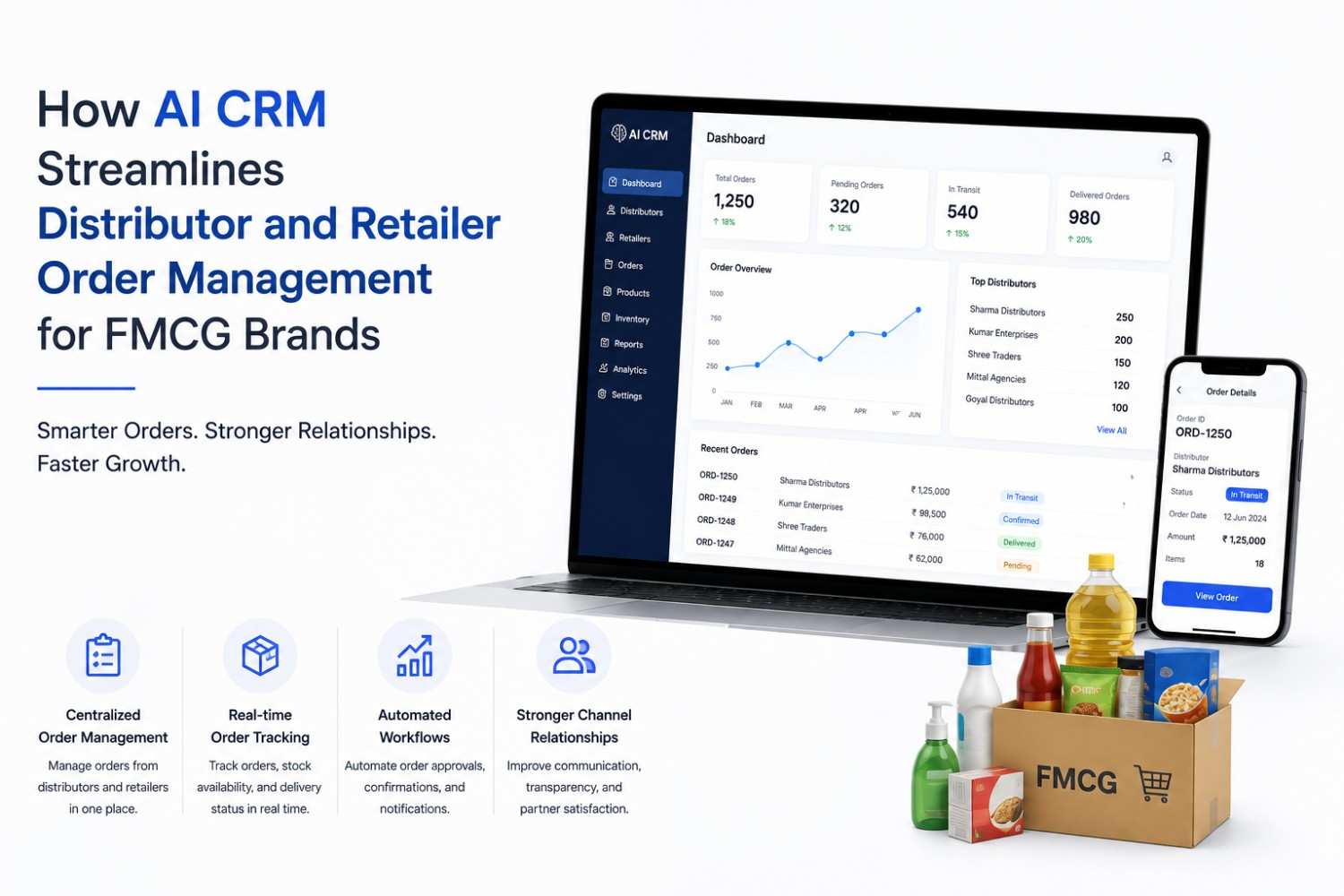
A retailer’s credit limit quietly maxing out or a reorder cycle silently breaking rarely gets a phone call to explain why. It just shows up later as a stock-out or an overdue payment nobody caught in time. Groweon’s AION watches order patterns and credit exposure across your distributor and retailer network at the SKU level, so gaps surface while there’s still time to act on them.
A brand running hundreds of distributors and thousands of outlets can’t have a field executive personally checking every retailer’s reorder cycle or running credit balance every week. So the ones drifting off pattern, ordering less, paying later, running low on a specific SKU rather than the whole line, tend to go unnoticed until the problem is already visible on a shelf or a ledger.
The fix isn’t more field staff watching more retailers. It’s catching the deviation from each retailer’s own normal pattern before it becomes a stock-out, a bad debt, or a lost account to a competing brand.
Order confirmations without a phone call
When a distributor places an order, AION sends an instant WhatsApp confirmation, removing the manual back-and-forth of confirming receipt.
SKU-level reorder gap detection
Rather than tracking a retailer’s orders in aggregate, AION monitors reorder frequency per SKU. A retailer who reliably reorders one variant every three weeks but has gone quiet on that specific SKU, while still ordering others normally, gets flagged, a pattern that aggregate order tracking would miss entirely.
Credit exposure and payment follow-up
AION tracks outstanding balances against each distributor’s credit terms and sends structured payment reminders as a balance approaches its limit, rather than after it’s already been breached.
A live view for sales managers
Sales managers see pending orders, approaching credit limits, and falling reorder activity across the network in one place, instead of piecing it together from field reports.
A retailer normally reorders a specific SKU every three weeks, alongside their regular full-line orders. Week four passes with the rest of their order pattern normal, but that one SKU missing. Because AION tracks at the SKU level rather than just overall order volume, it catches this even though the retailer’s total order activity looks unremarkable.
AION sends a WhatsApp reminder referencing that specific product. The retailer replies that a rack reset moved the product out of view and they’d genuinely forgotten to reorder it. They place the order in the same chat.
Left to aggregate-level tracking, this gap would have stayed invisible, since the retailer’s overall order volume never dropped. The SKU would have simply run out on shelf, likely replaced by whatever competing product filled that gap in the meantime.
| Process Step | Manual Process | AION-Driven Process |
|---|---|---|
| Order Confirmation | Phone Calls or Paper-Based Confirmation, Often Delayed | Instant WhatsApp Confirmation as Soon as the Order Is Placed |
| Reorder Monitoring | Tracked at an Overall Order Level, If Monitored at All | Monitored for Every SKU, Detecting Reorder Gaps That Aggregate Tracking Misses |
| Credit Exposure | Usually Identified Only After the Credit Limit Has Been Exceeded | Automatically Flagged as Outstanding Balances Approach the Approved Credit Limit |
| Manager Visibility | Information Scattered Across Field Reports and Manual Updates | Centralized Live Dashboard Showing Orders, Credit Status, and Reorder Activity |
Will this replace the field executive relationship?
No. AION handles routine confirmations and flagging. The field executive still owns the relationship and steps in for anything needing negotiation, like adjusting credit terms.
How does AION know what counts as a reorder deviation?
It’s based on each retailer’s own historical pattern, per SKU, not a fixed rule applied network-wide, so a retailer with a naturally irregular cycle on one product isn’t flagged unnecessarily.
Does this only work over WhatsApp?
WhatsApp is the primary channel given its response rates, though the CRM supports other channels depending on setup.
What does setup involve?
AION works from existing order and credit history, so distributors and retailers don’t need to change how they currently place orders.
The costliest distribution problems are the quiet ones, a single SKU going unordered, a credit balance drifting toward its limit. Groweon’s AION catches these at the level they actually happen, per product and per account, before they turn into a stock-out or a bad debt.
Share order history and credit terms for a batch of accounts, and Groweon can show which gaps AION would have caught, and at what point.
Can AION handle communication with hundreds of distributors at once?
Yes, it scales across the full network, personalizing messages based on each account’s own order and payment history.
Does AION track orders by SKU or just overall volume?
By SKU, which catches reorder gaps on individual products that aggregate order tracking would miss.
How does AION handle distributor credit limits?
It tracks outstanding balances against each distributor’s agreed credit terms and flags accounts as they approach their limit, rather than after it’s exceeded.
[wpforms id=”535″]

17 Sep, 2026
Summary Customer relationship management in 2027 will be fundamentally different...

17 Sep, 2026
Summary Salesforce CRM is the world’s most widely adopted customer...

16 Sep, 2026
For Indian small and medium businesses, the choice between Zoho...

15 Sep, 2026
Justdial is an important source of local enquiries for Indian...

15 Sep, 2026
Summary The best CRM for TradeIndia Leads should capture enquiries...