

Best Zoho CRM Alternatives in India for Growing SMBs in…
21 Sep, 2026
Summary (TL;DR): The best Zoho CRM alternatives in India are...
Updated: 4th August, 2026
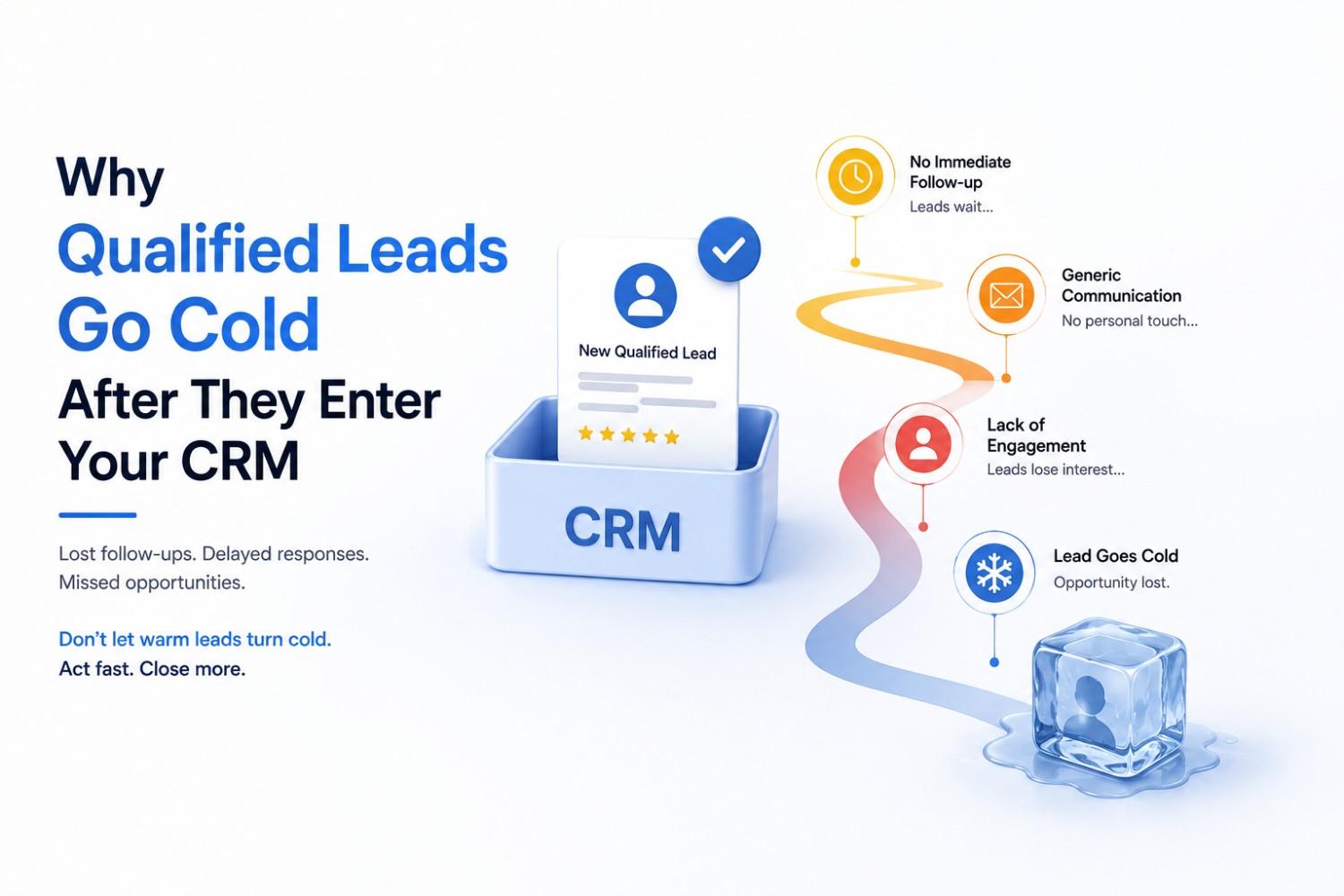
A qualified lead should trigger action, not create another item in a rep’s to-do list. Yet in most B2B teams, the moment between qualification and first meaningful outreach is governed by inboxes, handoffs, calendar availability, and memory. That delay is where intent fades. The qualified lead exists in your CRM, but no workflow reliably determines who should act, what they should say, which channel to use, or when to escalate.
This is a systems problem, not a team problem. 92% of B2B sales and marketing managers report that qualified leads are regularly dropped each month, with 37% attributing the gap to misaligned tools and teams. Groweon AION closes this gap with governed orchestration: routing, sequencing, and follow-up remain under your team’s control while execution moves at machine speed.
Qualification is not the finish line. It is the starting line.
Your team works hard to generate leads. Marketing runs campaigns. Inbound forms arrive. Sales development reps (SDRs) qualify prospects against your ideal customer profile. A lead earns the “qualified” status. And then—silence.
The qualified lead enters your CRM. But what happens next depends entirely on manual work: A rep notices it. A rep decides if it’s worth their time. A rep crafts an email. He logs the interaction. Days pass. The lead waits. Your competitor moves faster.
Only 2% of B2B sales close on the first contact. The remaining 98% require repeated outreach over time. Yet 48% of reps never send a follow-up email after the first message goes unanswered. The gap between what’s required and what actually happens is where your revenue disappears.
Response speed compounds this. 35-50% of sales go to the vendor who responds first. If you are second to follow up, you are out of the race. If your team qualifies a lead but then waits for a rep to manually route, compose, and follow up, you have already lost the window.
Lead management, as most teams practice it, breaks in three places.
No signal-driven routing
A qualified lead arrives. Your SDR team assigns it to a rep based on territory or gut feeling. That rep may be overwhelmed with existing deals. He may work a different industry vertical. That rep may prefer phone over email. The lead gets routed to whoever had an open slot, not who is best positioned to close it.
Meanwhile, the buyer is ready to talk. They filled out a form. They demonstrated intent. And they now wait for your team to make an internal decision about who talks to them.
Fragmented follow-up workflows
Your sales team lives in four systems: email, Slack, CRM, and calendar. A rep sends an initial email from Gmail. If the prospect doesn’t respond in two days, the rep mentally notes it and moves on. No structured sequence, reminder, or escalation. The lead falls into the void.
An advanced team might use a basic automation tool (email sequences, SMS reminders, calendar blocks). But this automation follows the same path for every lead. A school district buying committee and a single-decision-maker prospect get identical emails. Timing is fixed, not responsive to when the buyer is actually available.
No context continuity
When a lead goes stale, your team does not know why. Did the buyer go dark because they chose a competitor? Because their project got delayed? Because they were waiting for budget approval? Your team has no signal. So when a new buying signal appears six months later (the buyer engages with your content again, a committee member changes, the project restarts), your team re-qualifies from scratch instead of re-engaging with the right context.
This context loss is expensive. Groweon serves Education, Automobile, Real Estate, Insurance, FMCG Distribution, and B2B Sales. In Education, a school district proposal that stalls in February often restarts in June when budgets renew. But if your team has no institutional memory of that deal, you treat the June inquiry as a new prospect, not a returning opportunity.
Groweon AION operates at machine speed while your team stays in control. The difference between traditional automation and true governed orchestration is critical.
Traditional automation runs the same sequence for every lead. “If lead comes in, send email template A on day one, template B on day three, template C on day seven.” The path is identical for all leads. Timing is fixed. Personalization is superficial.
Governed orchestration with AION ingests signals in real time, applies routing rules, coordinates across channels, monitors engagement, and flags when human judgment is needed. When a qualified lead arrives, AION enriches the record, applies your routing rules (best-fit rep based on specialization and capacity), recommends or triggers approved sequences matched to that buyer profile, monitors engagement, and flags stalled activity for re-engagement. All of this remains visible and controllable by your team. Nothing happens without your guardrails.
If a lead engagement signal changes (a prospect visits your pricing page after going quiet, a new stakeholder joins the buying committee), AION flags it. Your team decides whether to accelerate outreach or adjust the approach. Every message AION coordinates is visible before send. Reps can customize, edit, hold, or reject.
This is governed orchestration: the speed and consistency of machines, the judgment and control of your team.
Groweon AION delivers five core capabilities that restructure how qualified leads convert into sales conversations.
Intelligent lead routing
When a qualified lead arrives, AION enriches the record and applies your routing rules. Route by vertical specialization? AION assigns the Education buyer to your rep with the strongest Education track record. Route by capacity? AION routes to the rep with the lightest pipeline. Route by historical win rate for this company size? AION applies that rule. You define the logic; AION executes it consistently. Qualified leads reach the right person immediately, not whoever is most visible in Slack.
Rule-based sequence triggering
AION coordinates follow-up sequences matched to buyer profile and engagement history. Define your rules: “If a prospect from a manufacturing company matches our ICP, start sequence A (technical focus). If a prospect from financial services matches ICP, start sequence B (compliance focus). If a prospect has already attended a demo, skip to sequence C.” AION applies these rules automatically. Each buyer enters a sequence tailored to their company and stage, not everyone gets identical email template.
Multi-channel orchestration
Follow-up today cannot be email-only. Response speed includes email, SMS, and voice calls, not just inbox waiting. AION coordinates touches across email and SMS (and voice when your team initiates calls). Each channel is used strategically based on the buyer’s engagement history and your team’s preferences. If a buyer engages with SMS but ignores email, future touches prioritize SMS. AION spaces touches to avoid bombarding a single contact while ensuring your message reaches the buying committee.
Automatic stall detection and flagging
A qualified deal that goes silent for 21 days is not dead. It is stalled. AION detects this silence and flags it for your team. AION surfaces context: “This deal stalled 21 days ago after a proposal was sent. Budget approvals typically take 60 days in this industry. Consider checking back in 30 days.” AION may also detect external signals (buying committee changes via public data, company news) that could unblock the deal. Your sales manager sees a list of stalled opportunities ranked by re-engagement potential. Your reps can re-engage with full context loaded.
CRM hygiene and action logging
Every action AION takes is logged in Groweon: sequence triggered, message sent, channel used, timing, engagement response, deal stage change. This history trains your team. You can audit AION’s decisions, see what sequences converted best for which buyer profiles, and refine your routing rules based on outcomes. Over time, you learn which first-touch approaches work for your buyers. Which follow-up cadences drive the most conversations. Which sequences convert best. Your lead management improves through accumulated learning, not through annual training.
Inbound lead qualification and immediate orchestration
Your website generates 500 inbound leads monthly. Today, a qualification specialist receives these leads daily, manually reviews each one, researches company information, qualifies against ICP, and assigns to a rep. This takes 5 to 10 minutes per lead: 40 to 80 hours monthly of pure admin work.
When a lead submits your form, AION ingests their information, enriches it (company size, industry, technographic data, previous interactions with your brand), evaluates against your ICP rules, and qualifies or routes to nurture. If qualified, AION routes to the best-fit rep and initiates a personalized sequence immediately. The lead receives a response within minutes, not days.
Result: 500 leads processed and in motion in the time it takes your team to have morning coffee. Reps receive only qualified, contextualized leads. Follow-up begins before the buyer’s attention drifts.
Stalled-deal recovery and re-engagement
Your average sales cycle is 90 days. Yet many pipeline deals stall for 30 or more days with zero activity. Your sales manager reviews the pipeline weekly and sends Slack reminders (“Hey, follow up on the Acme deal”). Most reps ignore these reminders. Some remember days later. By then, the buyer has moved on.
When a deal goes stale, AION flags it automatically. AION surfaces context: If the deal stalled after a proposal review, AION shows how long that stage typically takes in this industry and suggests talking points that address likely concerns. If the stall happened before a budget approval, AION flags upcoming fiscal cycles. Your sales manager sees stalled opportunities ranked. Your reps see the deal flagged with context loaded and a suggested next step. Send with one click, or customize it.
Result: Stalled deals restart automatically based on context, not manual reminders. Reps spend time on conversations that matter, not on pipeline scanning. Revenue that would have gone lost restarted and closed.
Buying committee orchestration across verticals
A school district deal involves procurement, IT, curriculum, and superintendent. Each has different priorities and communication preferences. A real estate development involves architects, investors, end-buyers, and regulators. Your rep cannot manually track who needs which message when.
AION maps the entire buying committee in Groweon and understands each stakeholder’s role and priorities. When outreach happens, AION helps ensure procurement receives a message about cost and compliance, IT receives a message about integration and uptime, and curriculum receives a message about adoption outcomes. AION spaces out touches so the committee isn’t bombarded. When a new stakeholder joins (a new budget analyst, a new regulatory contact), AION flags this and alerts your team to initiate outreach for that persona. Your team decides the message and timing.
Result: Multi-stakeholder deals close faster because no stakeholder is overlooked. Your team maintains continuity and context even as committee membership changes.
| Dimension | Traditional Follow-Up | Governed Orchestration (AION) |
|---|---|---|
| Triggering | Rep Remembers to Follow Up (or Doesn’t) | Rules-Based Sequences Triggered Automatically When Conditions Are Met |
| Routing | Assigned to Whoever Has Open Capacity | Applied to the Best-Fit Rep Based on Your Defined Rules (Specialization, Capacity, Track Record) |
| Sequencing | Same Email Sequence for All Leads | Tailored to Buyer Profile and Company; Escalates Automatically When Engagement Changes |
| Channel Mix | Email-Only or Basic SMS | Multi-Channel (Email, SMS) Orchestrated Based on Buyer Engagement History |
| Stall Handling | Manager Sends Slack Reminder | Automatic Detection with Context Flagged for Team Review |
| Learning | Anecdotal (“This Rep Is Good at Closers”) | Audit Trail Shows Which Sequences and Reps Converted Best |
| Context | Scattered Across Email, Slack, and CRM | All Interactions Logged in Groweon; Reps See Complete Interaction History |
| Speed to Response | Hours or Days (Depends on Rep Availability) | Minutes (Signal-to-Action Compressed into Workflow Execution) |
Before implementing governed orchestration, measure where follow-up is breaking. These metrics reveal the size of the opportunity.
Time from lead qualification to first meaningful touch (target: under 1 hour for inbound). What percentage of your qualified leads receive a first touch within your team SLA? Most teams aim for 80 to 90% compliance. If you are at 40%, that is your opportunity.
Average follow-up attempts per qualified lead (target: 3 to 5 attempts per lead over the initial sales cycle). Most teams average 1 to 1.5 attempts. The gap between what happens and what is needed reflects resource constraints and manual process weakness.
What percentage of qualified leads convert to a sales conversation (demo, call, discovery meeting)? Break this by source (inbound form, LinkedIn, referral, outbound), industry vertical, and assigned rep. Variance across reps often reveals routing or process issues. Variance by source often reflects lead quality or timing issues AION can address.
What percentage of your pipeline deals stall for 30+ days? Of those stalled deals, how many re-engage when contacted again? Tracking re-engagement rate (e.g., 30% of re-engaged stalled deals move to next stage) quantifies the revenue recovery opportunity.
How many qualified leads sit in your CRM unassigned or untouched for more than 24 hours? Track this weekly. If you consistently have 5-10% of qualified leads unassigned after 24 hours, that is friction AION eliminates.
Which reps have the highest lead-to-conversation conversion rate? Which have the highest conversion from conversation to proposal? Identifying your best converters helps you define routing rules: route inbound leads to the reps most likely to move them to next stage.
Together, these metrics paint a picture of follow-up efficiency. Most B2B teams discover that response time, follow-up consistency, and stalled-deal recovery are the three biggest leaks. Governed orchestration addresses all three.
“Won’t automated follow-up feel like spam or aggressive?”
Governed orchestration is not batch-and-blast. AION detects signals (a prospect visited your pricing page, downloaded a case study, responded to your last email) and applies your configured rules. Additionally, AION respects engagement preferences: if a buyer unsubscribes or stops engaging, your rules determine whether AION continues or pauses.
The follow-up is also routed to a real person, not a bot. The first message comes from a named rep with a clear next step. If the buyer is ready to talk, they can reply and reach a human immediately. AION removes friction for buyers who want to engage while respecting those who do not.
“What if AION’s routing or stall detection is wrong?”
Every action is logged with full reasoning. Your sales manager can see why AION routed a lead to Rep A instead of Rep B. If the decision was wrong, the manager can override it with one click. Stall detection has configurable thresholds. If AION flags a deal as stalled after 21 days, but your average sales cycle is 6 months, you can adjust the threshold. AION adapts to your business.
“Doesn’t this require ripping out our existing CRM and process?”
No. Groweon AION integrates with your current stack. Start with one workflow: inbound lead routing and initial sequence. Run AION in parallel with your existing process for two weeks. Compare results: leads routed faster, sequences started sooner, reps more contextualized. Measure impact. Then expand to the next workflow (stall detection and re-engagement). You build over time.
92% of B2B sales and marketing managers report that qualified leads are regularly dropped each month. 37% of those drops are attributed to misaligned tools and teams. This is not a mystery. Qualified leads fall through because follow-up is manual, fragmented, and left to individual rep judgment.
Governed orchestration compresses the signal-to-action timeline from days to minutes. AION routes intelligently, sequences based on buyer profile, coordinates across channels, detects stalls, and keeps your team in control through full transparency and audit trails. 35-50% of B2B deals go to the vendor who responds first. If your team qualifies a lead but then waits for a rep to manually route, compose, and follow up, you are already second.
Traditional follow-up will not scale. Manual routing, static sequences, and email-only outreach cannot compete with teams running orchestrated, signal-aware follow-up at machine speed. Groweon AION enables that orchestration. Your qualified leads no longer sit idle waiting for human decisions. They move forward automatically, contextualized, routed to the right person, and sequenced intelligently.
The follow-up gap is closing. The question is whether your team closes it or your competitors do.
Groweon AION powers governed orchestration for follow-up across Education, Automobile, Real Estate, Insurance, FMCG Distribution, and B2B Sales. See how AION transforms qualified leads into sales conversations automatically, or discuss which workflow (inbound routing and sequencing, stalled-opportunity recovery, or buying committee orchestration) would unlock the most pipeline for your team.
What is the difference between lead qualification and lead follow-up?
Lead qualification determines whether a prospect fits your ideal customer profile (right company size, industry, role, budget). Follow-up is what happens after that determination. A lead qualifies. Now you need to move them toward a sales conversation. Follow-up is the series of touches and orchestration that makes that happen. Most teams are strong at qualification but weak at follow-up because qualification is defined and repeatable, while follow-up requires manual persistence and multi-channel coordination. AION orchestrates the follow-up so reps do not have to choose between persistence and scale.
Can AION follow up with every qualified lead at the same time?
Yes. AION can initiate follow-up sequences with all qualified leads simultaneously. Each lead receives routing applied to the best-fit rep and sequences tailored to their company profile and buying stage. So 100 qualified leads might go to 15 different reps, each receiving the subset of leads matched to their specialization. Each buyer receives their first message from their assigned rep and subsequent touches adapted to their engagement. The result is 100 concurrent follow-up sequences, all personalized, all tracked in Groweon.
What happens if a lead doesn’t engage with the first follow-up?
AION does not abandon leads after one attempted touch. Your configured sequences define the follow-up cadence. If a buyer doesn’t respond to an initial email, your rules determine the next step: wait 2-3 days and send another email, send a follow-up via SMS, or flag for manual rep review. If engagement drops entirely for 21+ days (your configured threshold), AION flags the opportunity as stalled for your team’s attention. No lead gets dropped; the system keeps applying your defined rules.
Do reps lose control if AION is managing follow-up?
No. AION executes your configured rules, but reps retain full agency. Every message AION coordinates is visible in Groweon before it sends. Reps can customize, edit, hold, or reject any message. Every routing decision includes the reasoning, so reps know why a lead was assigned to them. If a rep disagrees with AION’s stall detection or re-engagement suggestion, they can override it. This governance means reps spend their time on high-value judgment calls (negotiation, relationship-building, strategy) instead on low-value admin (remembering to follow up, checking if a lead went dark).
Does this work for long-cycle deals like Education and Real Estate?
Yes. Long-cycle deals often stall because your team loses context or continuity breaks the relationship. AION maintains context across months or years. When a school district’s project restarts after budget approval, AION knows the entire history: proposals submitted, stakeholders engaged, objections raised, previous timelines. The re-engagement message references this history, restarting the conversation with full context rather than starting from scratch. The same applies to real estate developments, insurance broker relationships, and B2B sales cycles. Longer cycles actually benefit more from governed orchestration because the system never forgets and never lets a deal truly go cold without your team’s awareness.
The problem: 92% of B2B sales and marketing managers report that qualified leads regularly drop each month, with 37% citing misaligned tools and teams. Yet only 2% of B2B sales close on the first contact. Follow-up is manual, fragmented, and left to individual rep judgment. The result is that 35-50% of your pipeline goes to the first responder, and if your team qualifies but then waits for manual routing and composition, you are already second.
The solution: Groweon AION delivers governed orchestration. When a lead qualifies, AION applies your routing rules, initiates sequences tailored to that buyer’s profile and behavior, monitors engagement, detects stalls, and flags when human judgment is needed. Every action is logged in Groweon. Your team retains visibility and control. Follow-up moves from manual busywork to structured, rule-based orchestration.
The impact: Qualified leads convert faster because they enter a coordinated workflow, not a person’s mental to-do list. Stalled deals restart automatically based on your defined rules and context. Reps focus on conversations that require judgment instead of remembering to follow up. Revenue that would have gone lost gets recovered and closed.
In 2026, follow-up is not a rep skill. It is a system capability. Groweon AION delivers that capability across Education, Automobile, Real Estate, Insurance, FMCG Distribution, and B2B Sales.
[wpforms id=”535″]

21 Sep, 2026
Summary (TL;DR): The best Zoho CRM alternatives in India are...

21 Sep, 2026
Summary (TL;DR): Groweon suits Indian SMBs that want one AI-first...

21 Sep, 2026
Summary (TL;DR): Groweon suits Indian SMBs that want one AI-first...
18 Sep, 2026
Summary (TL;DR) B2B CRM is essential infrastructure for Indian SMBs...
17 Sep, 2026
Summary: CRM Software Customer relationship management software has become essential...