AI-Powered Lead Scoring: How to Prioritise High-Converting Leads
30 Mar, 2026
Not every lead in your pipeline deserves equal attention. Some...


Auto Capturing, nurturing, and converting potential customer leads.

Manage AMC contracts, track service requests, ensure timely renewals.

Tracks, resolves, manages issues, and gathers customer feedback.

Manage purchases, expenses, vendors, and POs efficiently with CRM.

Manages order lifecycle from placement to delivery completion.

Generates invoices and manages sales transactions and records efficiently.

Manages stock levels, tracks items, ensures efficient inventory control.

Manages dealer workflows, assigns leads, and tracks progress centrally.

WhatsApp CRM integration with bulk messaging, auto notifications, chatbots.

IVR enabled CRM integrates click-to-call, bulk dialling, recording features.

Achieves optimum productivity of tele-sales team with auto dialler.

Updated: 29th January, 2026
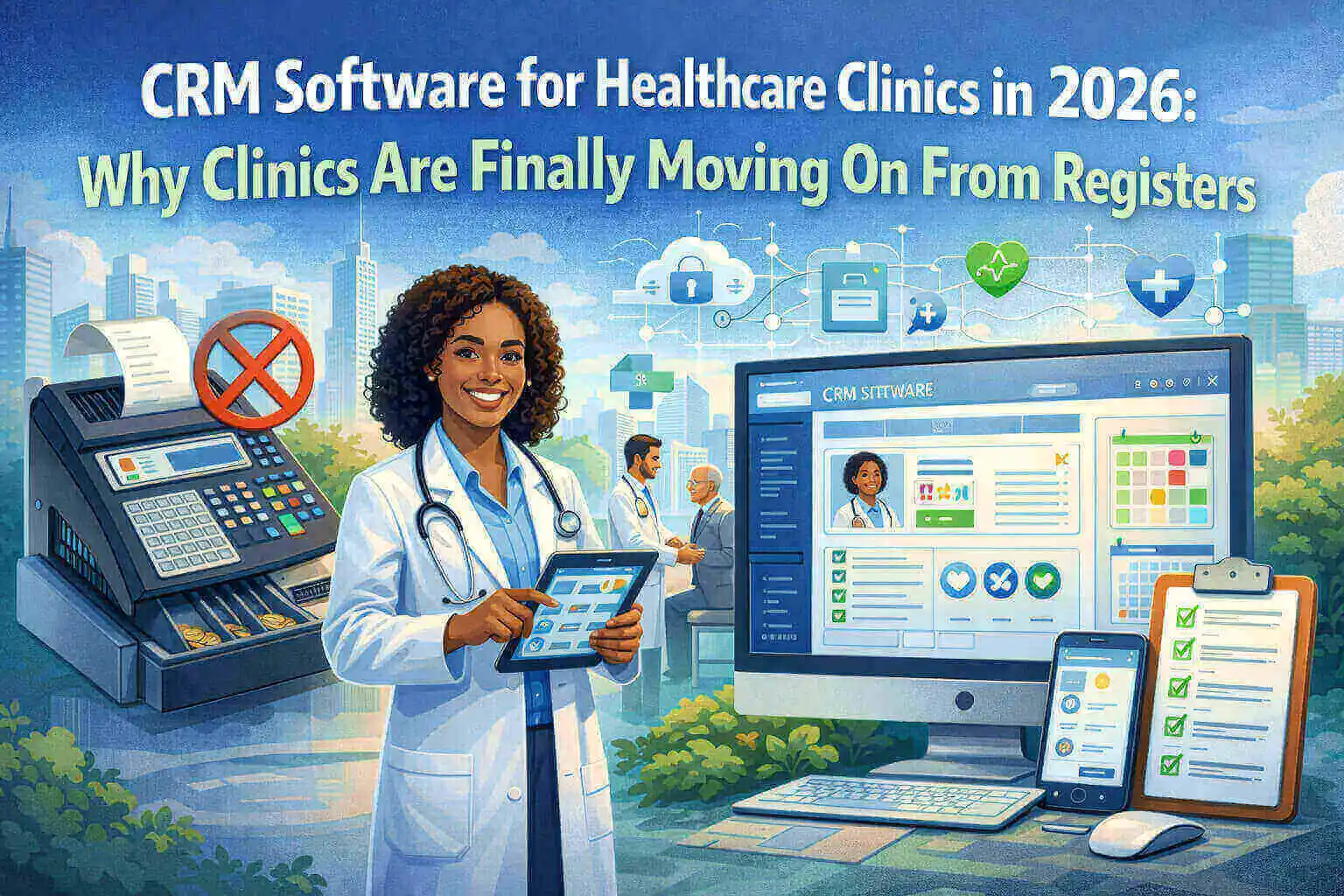
Let’s be honest — running a clinic is already stressful. Patients are waiting, phones keep ringing, staff are busy, and on top of that, you’re expected to remember who came when, who needs a follow-up, and which appointment is next.
Many clinics, even in 2026, still use registers, Excel sheets, or random WhatsApp messages to manage patients. At first, it feels manageable. You know your regular patients. Staff remember things. But slowly, things start going wrong.
An appointment is missed. A patient says, “I called yesterday.” Someone forgets to send a follow-up message. And then the day just feels chaotic.
This is exactly why clinics are turning to CRM software.
Most problems don’t happen because the staff is careless. They happen because everything is scattered.
Patient details are written somewhere. Appointment timing is noted somewhere else. Follow-ups are remembered in someone’s head. When the clinic gets busy, things slip. That’s normal.
By the end of the day, staff are tired, patients are unhappy, and no one really knows what went wrong.
A CRM doesn’t magically fix everything, but it brings order.
All patient details stay in one place. Name, number, visit history, next appointment — everything together. So when a patient calls, the staff doesn’t need to ask the same questions again. They just open the record and know what’s going on.
This alone saves a lot of time.
In 2026, missed appointments are expensive. They waste time for both the doctor and the patient.
With a CRM, appointments are visible. Reminders can be sent automatically. Even simple reminder messages reduce no-shows more than people expect.
Follow-ups also stop being “oh yaad nahi raha”. They are already scheduled.
Patients may not know what CRM is, but they feel the change.
They get reminders on time. They don’t have to repeat their details. They feel remembered. And when patients feel taken care of, they come back.
That’s how trust builds — not through big things, but small consistent actions.
When staff don’t have to search files or ask around, their work becomes smoother. The front desk and doctors stay on the same page.
Managers also get a clearer picture of daily work. No guessing. No confusion. Just visibility.
In 2026, patient data can’t be handled casually. A CRM helps keep information safe while still being easy to access for the right people.
This balance is important, especially as clinics grow.
Most clinics don’t adopt CRM because it’s “trendy”. They do it because manual systems start breaking under pressure.
CRM brings structure. It reduces daily stress. And it helps clinics focus more on patients instead of paperwork.
That’s it. No big promises. Just better control.
If your clinic feels busy but still disorganised, it’s probably not a people problem — it’s a system problem.
Switch to CRM software for healthcare clinics in 2026 and make daily work simpler for your staff and smoother for your patients.
Is CRM really needed for small clinics?
Yes. Small clinics benefit the most because one missed follow-up can mean losing a regular patient.
Will staff find CRM difficult to use?
Most modern CRMs are simple. Basic training is enough.
Does CRM help with appointment reminders?
Yes. Automated reminders reduce missed appointments a lot.
Is patient data safe in a CRM?
Good CRM systems provide controlled access and secure storage.
How quickly can a clinic start using CRM?
Usually very quickly. Setup and basic use don’t take much time.

30 Mar, 2026
Not every lead in your pipeline deserves equal attention. Some...

30 Mar, 2026
Let’s be honest. Not every lead is worth your time....
28 Mar, 2026
Small businesses do not need a CRM built for a...

28 Mar, 2026
If you run a small business in India, there is...
26 Mar, 2026
When you are starting out or running a lean operation,...