

Best Zoho CRM Alternatives in India for Growing SMBs in…
21 Sep, 2026
Summary (TL;DR): The best Zoho CRM alternatives in India are...
Updated: 10th August, 2026
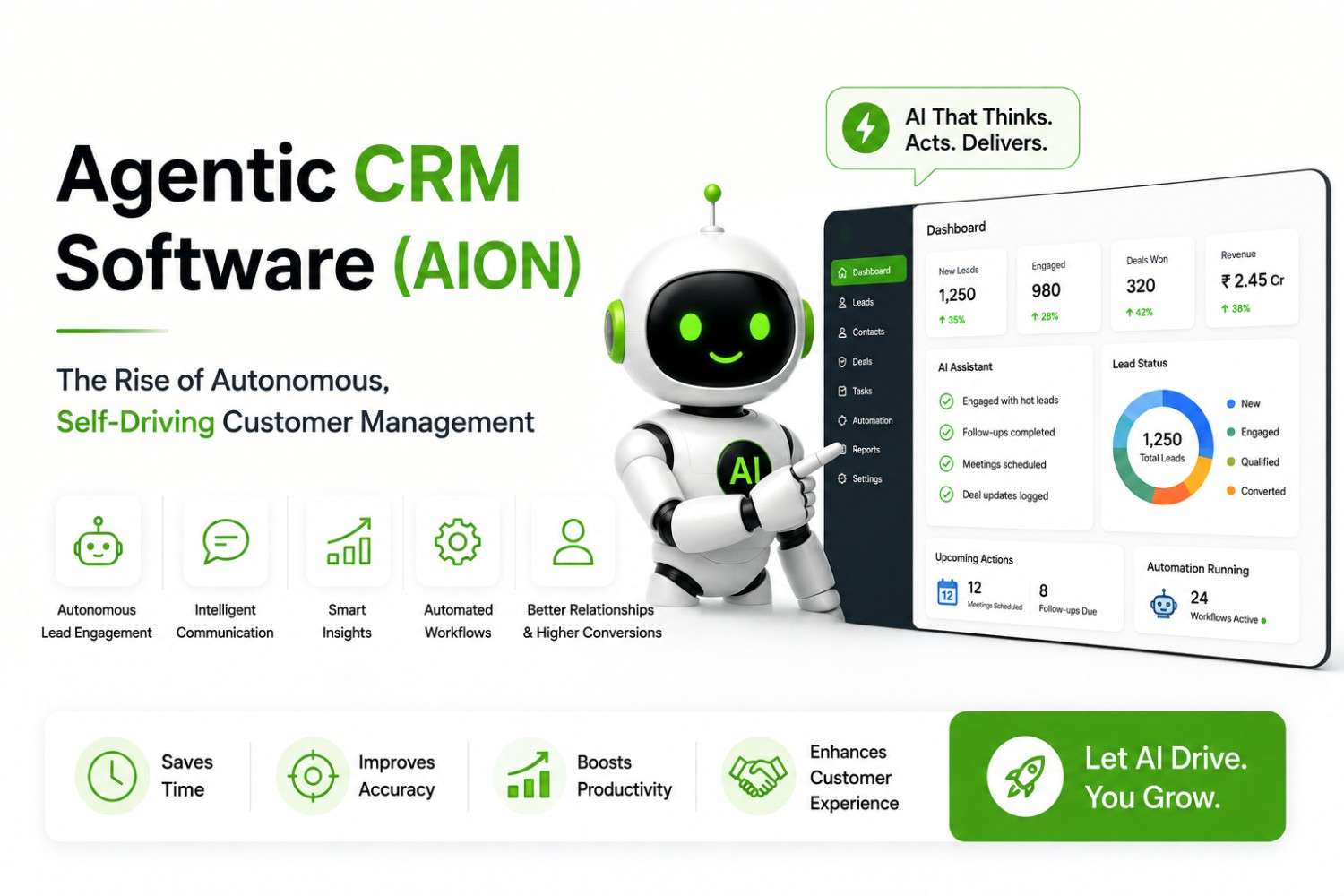
The biggest shift in CRM software for 2026–2027 is the transition from passive AI (which suggests actions) to agentic AI (which takes actions autonomously). This new category—often called “Agentic CRM software” or “Autonomous CRM software”—represents a fundamental reimagining of how businesses manage customer relationships.
Agentic CRM software refers to systems where AI agents don’t just analyze data or recommend next steps—they execute tasks independently on behalf of users. Instead of a sales rep manually updating a deal stage or sending a follow-up email, the AI agent does it automatically based on predefined rules and contextual understanding.
Key characteristics of Agentic CRM software:
| Traditional AI CRM Software | Agentic (Autonomous) CRM Software |
|---|---|
| Suggests Which Lead to Contact | Automatically Contacts the Lead with Personalized Messaging |
| Recommends Email Content | Drafts and Sends the Email Automatically Without Human Approval |
| Flags Outdated Records for Review | Automatically Updates or Archives Outdated CRM Records |
| Predicts Customer Churn Risk | Automatically Triggers Retention Campaigns and Schedules Check-In Calls |
| Logs Call Transcripts | Analyzes Customer Sentiment and Automatically Updates the Deal Stage |
This shift from “assistant” to “agent” dramatically reduces manual work and accelerates response times.
AI agents engage inbound leads through conversational chat, ask qualifying questions, score leads based on responses, and route high-quality prospects to the right sales rep—all without human intervention.
Instead of sales reps manually sending follow-up emails, AI agents automatically draft and send personalized messages based on triggers like email opens, website visits, or days since last contact.
AI analyzes email sentiment, call transcripts, and engagement signals to update CRM software deal stages in real-time. If a prospect mentions “budget approval” or “legal review,” the AI moves the deal to the appropriate stage.
AI agents monitor customer usage patterns and sentiment, then automatically trigger retention actions—like scheduling a check-in call, offering a discount, or assigning a dedicated success manager—when churn risk is detected.
AI negotiates meeting times by analyzing both parties’ calendars, sending availability options, and confirming appointments—all through natural language conversation.
AI continuously audits CRM software data, merges duplicates, flags outdated information, and enriches records with external data sources—without requiring manual cleanup projects.
Lofty AI
HubSpot AI Agents
Salesforce Einstein Agents
Zoho Zia AI
Specialized Agentic Platforms (emerging startups)
Sales and support teams reclaim 30–50% of their time previously spent on administrative tasks.
AI agents respond to leads and customer inquiries instantly—no waiting for human availability.
AI follows best practices every time, eliminating variability from human error or forgetfulness.
AI agents handle increasing volumes without proportional increases in headcount.
AI continuously learns from outcomes, improving its actions over time.
Over-reliance on AI can make interactions feel impersonal. Balance automation with human connection for high-value relationships.
AI can make mistakes or misinterpret context. Implement human oversight for critical decisions like pricing or contract terms.
Autonomous AI must operate within regulatory boundaries (GDPR, CCPA, etc.). Ensure your CRM software has appropriate consent management and audit trails.
Teams may resist AI taking over their tasks. Communicate how AI augments (not replaces) human work and provide training.
By 2027, expect to see composable agentic ecosystems where specialized AI agents handle specific tasks (lead qualification, follow-up, data cleanup) and coordinate autonomously, voice-first agentic interfaces where users give natural language commands (“Follow up with all hot leads from last week”) and AI executes, and cross-platform agentic orchestration where AI agents coordinate actions across CRM software, email, calendar, marketing automation, and support tools.
Agentic CRM software represents the next evolution of customer relationship management—moving from passive AI assistants to autonomous agents that execute tasks independently. In 2026, early adopters are already seeing dramatic improvements in efficiency, response times, and scalability.
The question isn’t whether agentic AI will transform CRM software—it’s how quickly your organization can adopt it to stay competitive.
[wpforms id=”535″]

21 Sep, 2026
Summary (TL;DR): The best Zoho CRM alternatives in India are...

21 Sep, 2026
Summary (TL;DR): Groweon suits Indian SMBs that want one AI-first...

21 Sep, 2026
Summary (TL;DR): Groweon suits Indian SMBs that want one AI-first...
18 Sep, 2026
Summary (TL;DR) B2B CRM is essential infrastructure for Indian SMBs...

17 Sep, 2026
Summary: CRM Software Customer relationship management software has become essential...