Why Indian SMBs Lose Leads Without a WhatsApp CRM
10 Feb, 2026
For Indian small and medium businesses, WhatsApp is not just...


Auto Capturing, nurturing, and converting potential customer leads.

Manage AMC contracts, track service requests, ensure timely renewals.

Tracks, resolves, manages issues, and gathers customer feedback.

Manage purchases, expenses, vendors, and POs efficiently with CRM.

Manages order lifecycle from placement to delivery completion.

Generates invoices and manages sales transactions and records efficiently.

Manages stock levels, tracks items, ensures efficient inventory control.

Manages dealer workflows, assigns leads, and tracks progress centrally.

WhatsApp CRM integration with bulk messaging, auto notifications, chatbots.

IVR enabled CRM integrates click-to-call, bulk dialling, recording features.

Achieves optimum productivity of tele-sales team with auto dialler.

Updated: 18th December, 2025
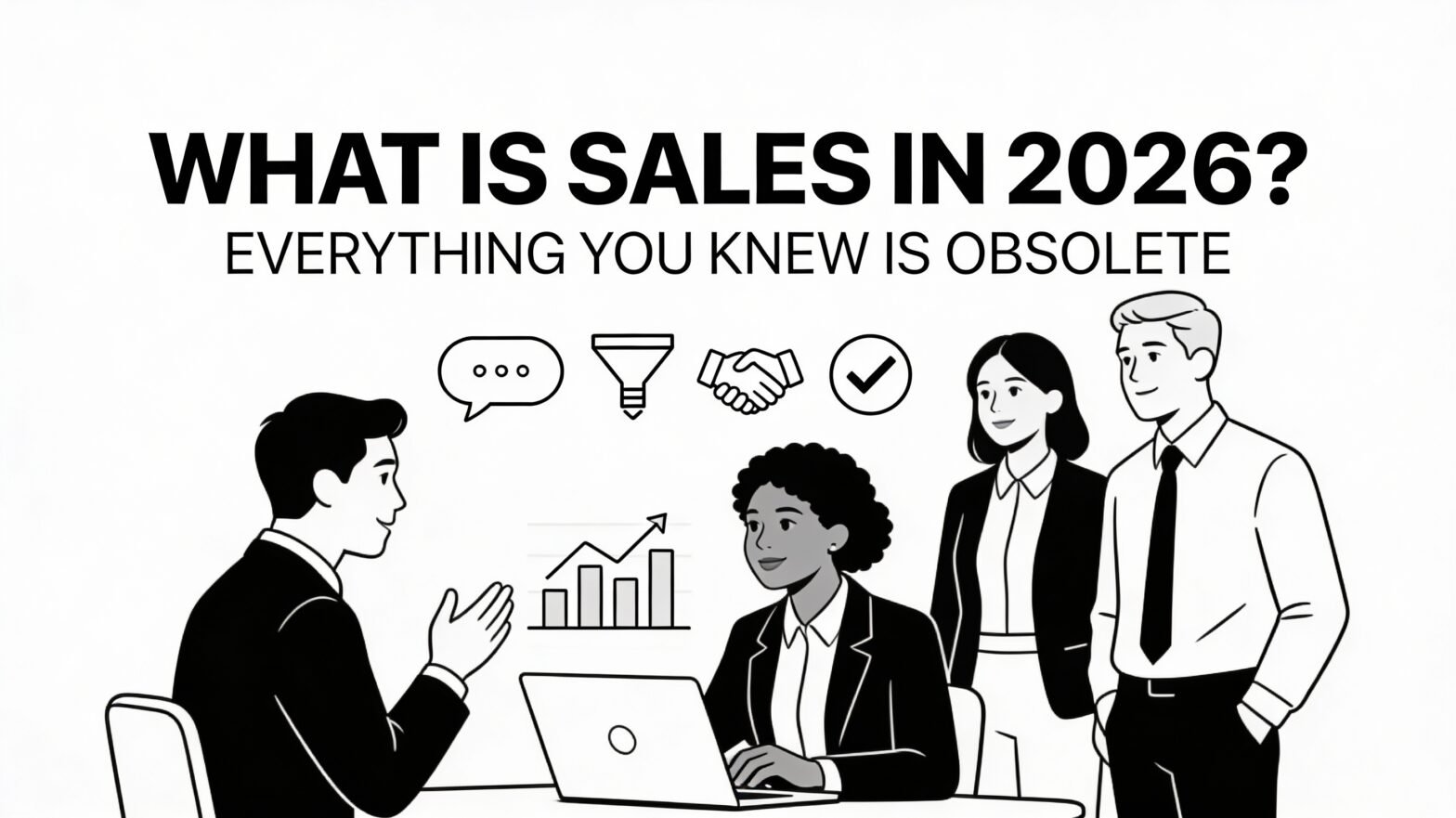
Sales is one of those words everyone uses, but very few people actually pause to think about what it means. Ask five people, and you’ll get five different answers. Some will say sales is persuasion. Others will say it’s a negotiation. Many still believe it’s about convincing someone to buy something they’re not sure about.
In real business life, sales is none of that.
Sales is simply the process of helping the right people make the right decision — at the right time.
When sales are done properly, it doesn’t feel aggressive or uncomfortable. It feels like a conversation that makes sense for both sides.
At its simplest level, sales is the journey from interest to commitment.
Someone shows curiosity. You understand what they’re dealing with. You explain how you can help. They decide whether to move forward.
That’s it.
Sales is not one phone call. It’s not a single meeting. It’s not a clever pitch or a fancy script. It’s a series of small interactions that build clarity and trust over time.
Most customers don’t buy because they were “sold to.” They buy because something finally clicked.
Sales used to be loud. Pushy. Scripted.
That doesn’t work anymore.
Today’s buyers already know a lot before they ever speak to a sales team. They’ve searched on Google. They’ve compared options. They’ve read reviews. By the time they talk to you, they’re not looking for pressure — they’re looking for confirmation.
Modern sales is less about talking and more about understanding.
If your sales approach still sounds like a memorised pitch, customers can sense it instantly. And once they do, the conversation is basically over.
Informed buyers now expect hyper-personalisation. They want you to demonstrate that you understand their industry, their challenges, and their competitive landscape before the first call. Generic outreach is invisible. Teams that win research deeply, reference specific data about the prospect’s business, and arrive with genuine insight, not optimism.
Forget complicated diagrams. In real businesses, sales usually move through these phases:
This could be a call, a form fill, a message, or even a referral. At this stage, nothing is confirmed. Curiosity is low, attention is short.
Your only goal here is not to sell — it’s to qualify and see if the conversation is even worth continuing.
This is where many teams waste time. Not every lead deserves full attention. Early-stage qualifying saves everyone’s time. Look for:
A short qualifying conversation here prevents weeks of wasted follow-ups later.
This is where many teams mess up. They start explaining too early.
Good salespeople ask questions first:
This stage decides everything.
The depth of understanding you build here directly determines whether your solution feels relevant or generic. Most objections later in the process stem from insufficient discovery here. When a customer says “it’s too expensive,” often what they mean is “I don’t see how this solves my specific problem.” That gap reveals a discovery failure.
Discovery also means understanding the buying committee. Sales no longer happens with one person. You’re navigating finance teams, operations teams, technical teams, and executives with competing priorities. The best salespeople now ask: “Who else needs to be involved in this decision? What are their concerns?” This approach prevents deals from stalling in the final stages.
Invest time here. The best salespeople spend 60-70% of early conversations listening, not talking.
Once you understand the problem, you suggest a solution. Not ten features. Not everything you offer. Just what actually matters to them.
This is where personalisation becomes visible. Reference specific challenges they mentioned. Connect capabilities directly to outcomes they care about. Show that you were actually listening.
When the solution feels relevant, resistance drops naturally.
The best positioning isn’t about being impressive — it’s about being specific. A customer facing cash flow problems doesn’t care about your product’s 47 features. They care that your solution reduces their accounting workload by 8 hours per week, freeing up time for strategic work.
Be transparent about what you don’t do. Customers now trust vendors more when they’re honest about fit. “This might not be the right solution for your use case” builds more credibility than “We can do everything.”
Price, timing, trust, comparison — doubts always show up. That’s normal.
Objections don’t mean rejection. They mean the customer is thinking seriously.
Common objection categories include:
Each requires different handling:
Don’t try to overcome every objection. Some objections reveal genuine misalignment. Recognizing when to walk away is a sales superpower.
Closing doesn’t happen because of pressure. It happens when confusion disappears.
By this stage, if you’ve done discovery well and addressed genuine concerns, most customers are ready to move forward. The “close” is rarely dramatic. It’s usually a simple: “Does this make sense?” followed by next steps.
If closing feels difficult at this stage, the problem wasn’t the pitch — it was earlier stage discovery or positioning.
Sales usually fails for very boring reasons.
Not because people are bad at talking. Not because the product is bad.
It fails because:
Most sales problems are actually process problems.
A mediocre salesperson with excellent systems beats a brilliant salesperson with no structure. This is why many founder-led sales succeed — there’s only one person, so context never gets lost. But the moment you scale, structure becomes critical.
Common process breakdowns:
These aren’t talent issues. They’re systems issues.
Once leads increase, memory stops working.
You can’t remember who you spoke to last week. You forgot what was discussed. You’re not sure who needs a follow-up.
This is where structure matters.
Modern sales teams don’t rely on memory or scattered notes. They rely on systems that keep conversations organised and visible.
That’s why CRM tools have become part of everyday sales work — not as a replacement for people, but as support for them.
A good CRM should answer:
Without this visibility, scaling is nearly impossible. With it, even small teams can manage complex pipelines.
The structure also enables consistency. When every team member follows the same process, outcomes become predictable. That predictability is what allows businesses to forecast, scale, and make strategic decisions.
Here’s something many businesses realise too late:
The sale doesn’t end when money comes in.
What happens after the sale decides whether the customer stays, upgrades, or refers others.
Follow-ups. Support. Simple check-in messages. Onboarding success. Regular business reviews.
These things don’t feel like “sales,” but they are. Long-term revenue almost always comes from relationships, not one-time wins.
In fact, for most SaaS and subscription businesses, post-sale revenue often exceeds new customer revenue:
A customer who feels supported after purchase becomes your best sales asset. They renew without negotiation, upgrade without objection, and refer without being asked.
This is why the best sales teams are deeply aligned with customer success. Sales doesn’t end at signature — it transforms into account management.
Modern sales teams focus on:
Consistency instead of intensity — Small, regular actions compound. One strategic follow-up per week beats five frantic calls on closing day.
Clarity instead of pressure — Remove confusion, not objections. Customers move forward when they understand exactly what they’re getting and why it matters.
Follow-ups instead of one-time calls — Most deals close after multiple touchpoints. The team that follows up systematically wins.
Listening instead of talking — Your best discovery questions are genuine. Customers tell you exactly what they need if you ask the right questions.
Process over personality — Your process should work whether your star salesperson is present or not. Build systems, not dependencies.
Data-driven decisions instead of gut feels — Track conversion rates at every stage, identify where deals stall, and continuously optimize. What gets measured gets improved.
These teams treat sales as a daily habit, not a last-minute activity.
Small improvements — like better follow-up timing, clearer discovery questions, or more structured handoffs — often make a bigger difference than changing the entire pitch. A 20% improvement in follow-up consistency beats a rebranded message every time.
The math is simple: If 100 prospects enter your pipeline and 30% close, that’s 30 deals. If you improve your process so 35% close, that’s 5 additional deals — often with zero change to product or messaging.
Sales is not manipulation. Sales is not persuasion. Sales is not convincing someone who isn’t interested.
Sales is about recognising genuine needs and responding to them properly.
When sales are handled with structure, honesty, and patience, it stops being stressful. It becomes predictable. And when sales become predictable, businesses grow with confidence.
At the end of the day, sales is still human. Tools help. Processes help.
But trust is what actually closes deals.
Build that. Protect that. Measure that. Everything else follows.
Ready to build a sales process that scales? Groweon is designed to handle the complexity of modern sales — tracking every conversation, organizing your pipeline, and giving your team visibility to close predictably. Book a free 15-minute demo and see how we can streamline your sales workflow.
1. Is sales still about persuasion in modern business?
No. Modern sales is less about persuasion and more about clarity. Buyers today are already informed. Sales now focuses on understanding a buyer’s situation, removing confusion, and helping them make a confident decision rather than pushing them toward one.
2. Why do traditional sales scripts fail today?
Traditional scripts fail because buyers can sense inauthenticity immediately. Modern buyers expect personalised, context-aware conversations. Rigid scripts ignore the buyer’s real problems and create resistance instead of trust.
3. What skills matter most for sales professionals in 2026?
The most important skills are active listening, problem diagnosis, stakeholder management, and follow-up discipline. Product knowledge still matters, but the ability to ask the right questions and manage the process consistently matters more.
4. How does a structured sales process improve results?
A structured sales process prevents missed follow-ups, lost context, and stalled deals. It ensures every lead has an owner, a next step, and clear progress—making outcomes more predictable and reducing reliance on individual memory or hero performers.
5. Why is post-sale activity still considered part of sales?
Because long-term revenue comes from renewals, upsells, and referrals. Post-sale support, onboarding, and regular check-ins build trust, increase customer lifetime value, and turn customers into advocates—often generating more revenue than the initial deal.

10 Feb, 2026
For Indian small and medium businesses, WhatsApp is not just...

09 Feb, 2026
Let me be honest, if you’re running a B2B sales...
05 Feb, 2026
Most businesses invest in a CRM Software with one simple...

03 Feb, 2026
Introduction In 2026, Indian businesses are not short of orders....

31 Jan, 2026
Sales growth for Indian SMBs in 2026 is no longer...