AI-Powered CRM Trends 2026: What Indian Companies Need to Know
05 Mar, 2026
India’s sales landscape is changing faster than most businesses realize....


Auto Capturing, nurturing, and converting potential customer leads.

Manage AMC contracts, track service requests, ensure timely renewals.

Tracks, resolves, manages issues, and gathers customer feedback.

Manage purchases, expenses, vendors, and POs efficiently with CRM.

Manages order lifecycle from placement to delivery completion.

Generates invoices and manages sales transactions and records efficiently.

Manages stock levels, tracks items, ensures efficient inventory control.

Manages dealer workflows, assigns leads, and tracks progress centrally.

WhatsApp CRM integration with bulk messaging, auto notifications, chatbots.

IVR enabled CRM integrates click-to-call, bulk dialling, recording features.

Achieves optimum productivity of tele-sales team with auto dialler.

Updated: 30th December, 2025
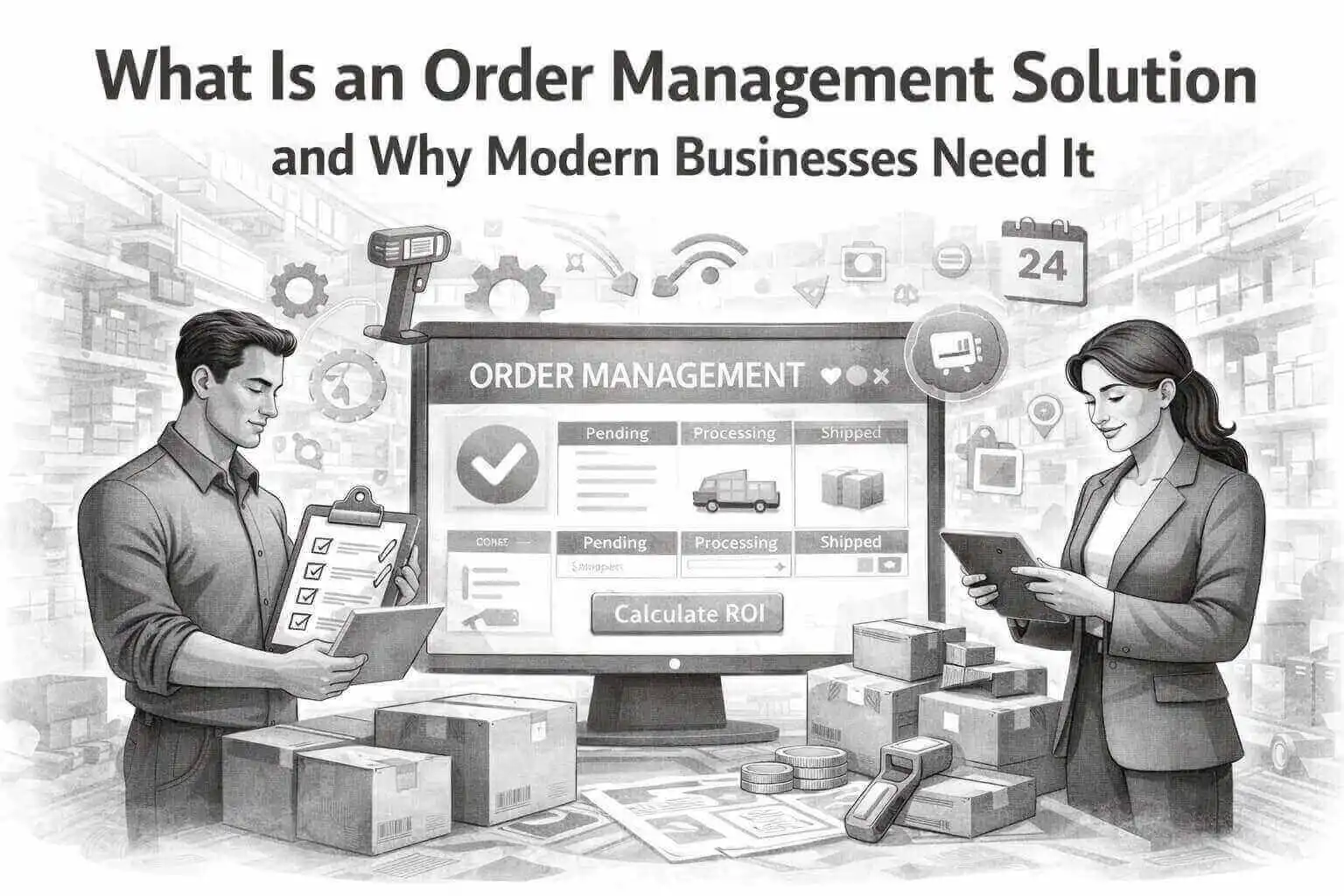
Let’s talk honestly.
Orders are not just numbers in a system. They are promises made to customers. And when those promises are delayed, mixed up, or forgotten, customers don’t just complain—they leave.
Many businesses don’t realise this early. At first, orders are manageable. Someone checks emails. Someone updates Excel. Someone calls the warehouse. It works… for a while.
Then the business grows.
And suddenly, things start slipping.
That’s where an order management solution comes into the picture.
An order management solution helps businesses keep track of orders without losing their sanity.
It records orders, tracks inventory, manages shipping, and keeps order details in one place. Simple as that.
An order management system is not just software. It’s the difference between “we’ll check and get back to you” and “yes, your order is already on the way.”
Instead of juggling multiple tools, teams get one system that shows what’s ordered, what’s packed, what’s shipped, and what’s pending.
Here’s a real scenario.
A customer places an order in the morning. The order management system captures it immediately. Inventory updates automatically. The warehouse knows what to pack. Shipping details are shared. The customer gets updates without asking.
Now compare this with manual handling.
Someone forgot to update the stock. Someone missed the email. Someone shipped the wrong item. Support starts getting angry calls.
That’s the difference an order management solution makes—quietly, in the background.
Most businesses don’t plan to adopt an order management system.
They are forced to.
Orders Come From Too Many Places
Website orders. Marketplace orders. Offline sales. WhatsApp orders. Sales team orders.
Managing all this separately is exhausting. An order management solution brings everything together so nothing gets missed.
Selling something that isn’t available feels unprofessional. Customers lose trust quickly.
An order management system keeps inventory updated in real time so businesses don’t promise what they can’t deliver.
Manual processes don’t scale. During sales seasons or promotions, errors multiply.
Automation through an order management solution reduces dependency on people remembering things.
Customers Expect Answers—Fast
“Where is my order?”
“When will it arrive?”
“Has it been shipped?”
With an order management system, answers are available instantly. No guessing. No delays.
More products. More locations. More orders.
Without structure, growth creates chaos. An order management solution gives businesses a strong backbone.
Nothing fancy. Just reliable.
Orders are connected to people.
When an order management system works with a CRM, teams understand customers better. Support teams see order history. Sales teams know buying patterns. Communication becomes smoother.
It stops feeling like “order vs customer” and becomes one complete process.
If your business is still managing orders manually, it may work today—but it won’t work forever.
Customers don’t care about internal struggles. They care about getting what they paid for, on time.
A good order management solution helps businesses stay organized, avoid unnecessary stress, and deliver consistent service. A reliable order management system protects customer trust—and that matters more than anything.
That’s why modern businesses don’t treat order management as optional anymore.
An order management system helps businesses track and manage orders from start to finish. It keeps order details, inventory, and delivery status in one place. This reduces confusion and manual work. It also helps teams respond faster to customer queries.
Manual tracking depends on spreadsheets and people remembering updates. An order management solution automates most of the work and updates data in real time. This reduces errors and delays. It also makes scaling easier as order volume grows.
Any business that receives regular orders can benefit from it. It is especially useful for growing businesses handling orders from multiple channels. When managing orders starts feeling messy, an order management system becomes necessary. It brings structure to daily operations.
Yes, an order management system can integrate with CRM software. This allows teams to see customer details and order history together. It improves coordination between sales and support teams. Overall, it leads to a better customer experience.

05 Mar, 2026
India’s sales landscape is changing faster than most businesses realize....

02 Mar, 2026
Here is a number that should concern every sales leader:...

28 Feb, 2026
Your customers are already on WhatsApp. With over 2 billion...

27 Feb, 2026
Every business runs on leads. But generating leads is only...

24 Feb, 2026
Sales is one of the most human-driven professions in business....