Why Indian SMBs Lose Leads Without a WhatsApp CRM
10 Feb, 2026
For Indian small and medium businesses, WhatsApp is not just...


Auto Capturing, nurturing, and converting potential customer leads.

Manage AMC contracts, track service requests, ensure timely renewals.

Tracks, resolves, manages issues, and gathers customer feedback.

Manage purchases, expenses, vendors, and POs efficiently with CRM.

Manages order lifecycle from placement to delivery completion.

Generates invoices and manages sales transactions and records efficiently.

Manages stock levels, tracks items, ensures efficient inventory control.

Manages dealer workflows, assigns leads, and tracks progress centrally.

WhatsApp CRM integration with bulk messaging, auto notifications, chatbots.

IVR enabled CRM integrates click-to-call, bulk dialling, recording features.

Achieves optimum productivity of tele-sales team with auto dialler.

Updated: 27th October, 2025
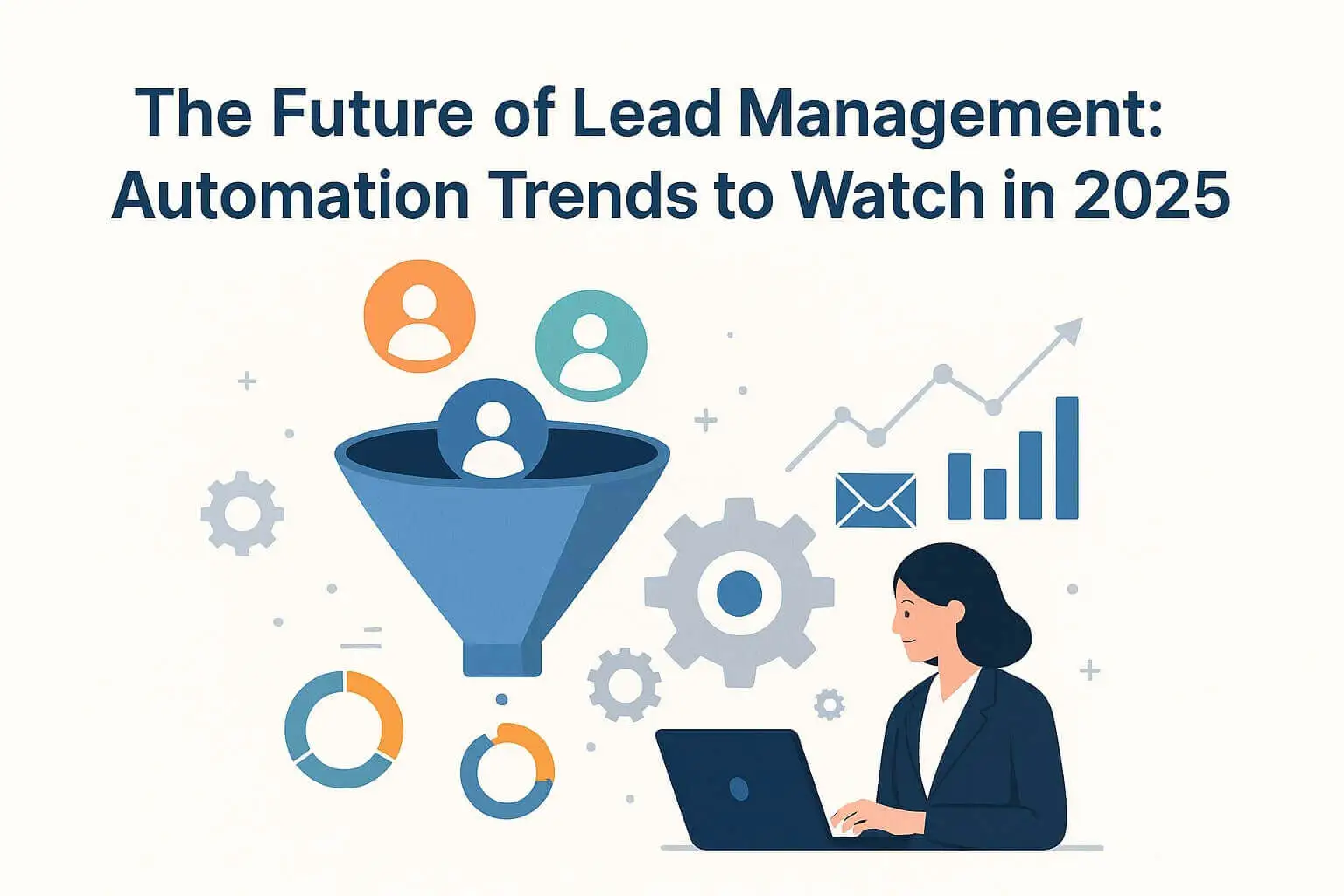
In today’s competitive and highly technology-evolved market, managing prospects by yourself is not an easy task. In today’s time, customers want that businesses give them fast and accurate responses, maintain personal communication with them, and provide a smooth experience. No company wants their prospects to get spoiled, that’s why many businesses are quickly moving toward sales automation so that leads can be properly captured, tracked, and nurtured.
By the time 2025 comes, automation has become an essential part of the latest Lead Management Software. In this blog, we will see some future trends of Lead Management Solutions that solve business issues.
Gone are the days of manual entry of leads from forms, emails, and social media. In 2025, AI-driven Lead Management Solutions capture leads from multiple channels like websites, ads, WhatsApp, and social media automatically and store them in one place.
This, for example, instantly records the lead when someone fills out a form on your website or sends a message on Instagram; it assigns that lead to the right salesperson and even sends an automatic follow-up message.
Why this matters:
This saves time, avoids data loss, and ensures every lead is captured fast—no missed opportunities.
Not all leads are created equal, and some are ready to purchase today, while others may only desire information. Automation tools in Lead Management Systems use behaviour tracking and data analysis to score each lead, based on interest level, in 2025.
For instance, it could be a lead opening your emails, visiting the pricing page, or booking a demo that gets a higher score. The system then automatically prioritizes these leads for quicker follow-ups.
Why this matters:
This allows sales teams to focus on the leads that really matter and improve conversion rates while saving irreplaceable time.
Modern lead management solutions can automatically send customized emails, messages, and reminders based on where the lead is in the buying journey.
Let’s say someone downloaded your brochure — the system can send them an automatic email explaining your product benefits. If next they visit your pricing page, you can follow up with a limited-time offer.
Why this matters:
Personalization engenders trust. Rather than a one-size-fits-all solution, each lead gets messages that match their interests and timing.
One of the big changes in 2025 is that lead management systems now connect with different platforms like WhatsApp, Facebook Ads, emails, and websites. By integrating different channels everything will work together at one integrated place. If anyone contact you thourgh any of social meadia system automatically capture details of that particular person. So that you can keep track of that lead.
Why this matters:
It saves time, reduces the hassle of jumping between different tools, and helps you see everything about your customers in one view.
Loosing potential customers beacuse of no follow-up is one of the main reason of business loss. Here automation plays a vital role in managing follow-up.
Prsent smart and automated Lead Management Software ensure that you and your team never miss any follow-up by sending automatic alerts and notfication for upcoming follow-up, when needed to contact lead via email, message or call such as:
Why it matters:
This kind of automation keeps your sales process smooth, consistent, and organized—so every lead gets the right attention at the right time.
Data-driven decision-making has become easier than ever. Modern Lead Management Systems now offer real-time analytics that give you clear insights into your leads—where they come from, which sources convert best, and how long it takes to close a deal.
Why it matters:
You can measure performance, spot bottlenecks, and make improvements that directly boost sales.
Example:
If your analytics show that most leads come from Instagram, you can confidently increase your marketing spend there to get a higher ROI.
With remote and hybrid work becoming the norm, mobile-friendly systems are no longer optional—they’re essential. Today’s Lead Management Solutions let your sales team manage leads, update statuses, and send follow-ups directly from their smartphones.
Why it matters:
Your sales team stays productive and connected from anywhere—whether they’re in the office, traveling, or meeting clients. This flexibility ensures that no lead is ever missed, no matter where your team is.
The next step in lead management is pretty simple it’s about knowing which people are more likely to buy from you. It helps you see who’s really interested in your product, who might buy soon, and who from your team should talk to them. This way, you can spend your time on the right people instead of running after everyone.
Why this matters:
It aids in keeping your business one step ahead and enables you to focus on leads that are most likely to bring results.
Final Thoughts
The future of lead management is all about automation, personalization, and intelligence. Those businesses that will adapt to the trends accordingly will enjoy faster sales, better relationships with their customers, and higher growth.
Automation is no longer a luxury; it is a necessity. In the year 2025, any smart business will leverage automation not merely to manage leads but build connections that would lead to loyal customers.

10 Feb, 2026
For Indian small and medium businesses, WhatsApp is not just...

09 Feb, 2026
Let me be honest, if you’re running a B2B sales...
05 Feb, 2026
Most businesses invest in a CRM Software with one simple...

03 Feb, 2026
Introduction In 2026, Indian businesses are not short of orders....

31 Jan, 2026
Sales growth for Indian SMBs in 2026 is no longer...