

What Is Agentic CRM? A Complete Guide for Business Owners
05 Nov, 2026
Summary Agentic CRM is an emerging approach to customer relationship...
Updated: 5th October, 2026
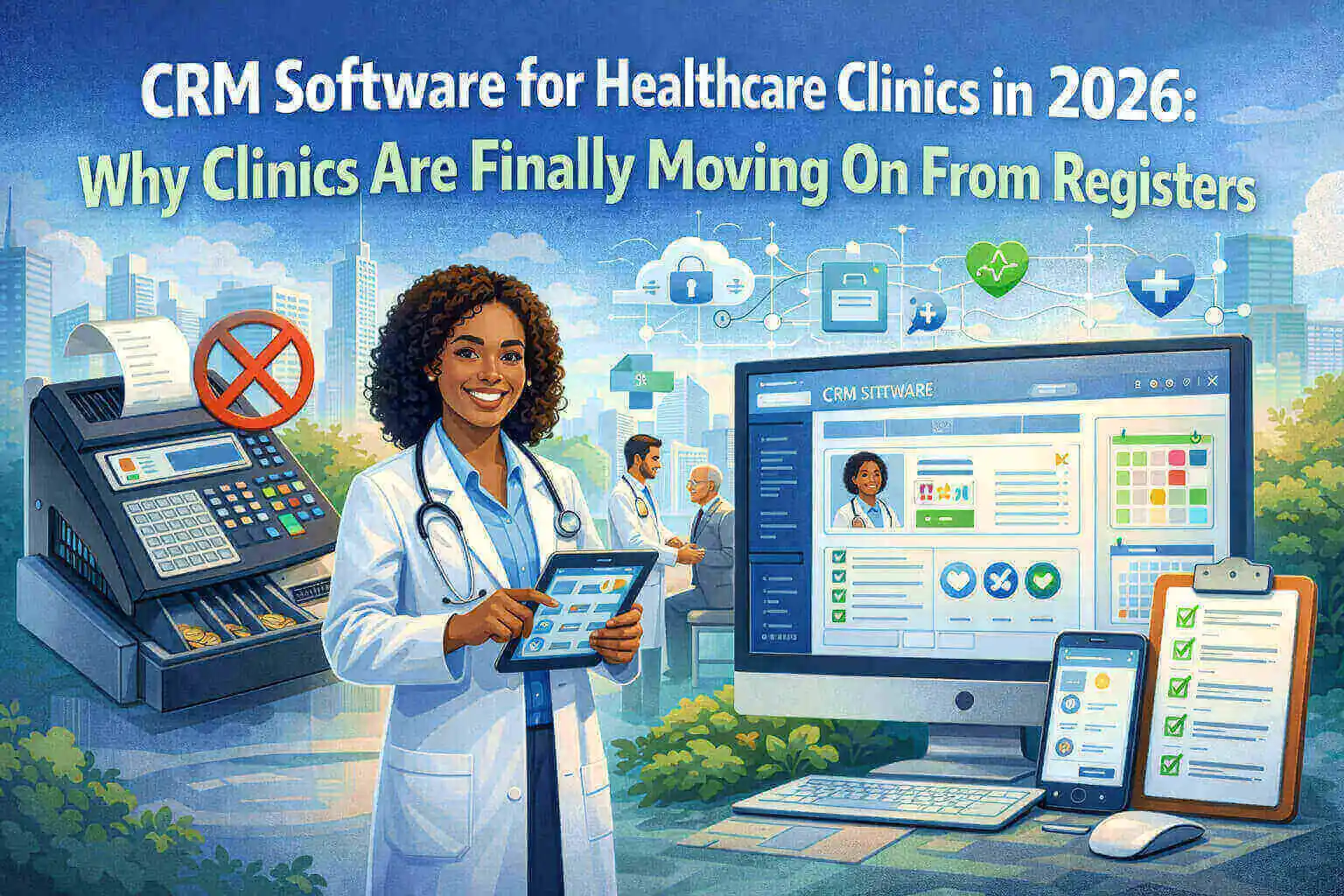
Let’s be honest — running a clinic is already stressful. Patients are waiting, phones keep ringing, staff are busy, and on top of that, you’re expected to remember who came when, who needs a follow-up, and which appointment is next.
Many clinics, even in 2026, still use registers, Excel sheets, or random WhatsApp messages to manage patients. At first, it feels manageable. You know your regular patients. Staff remember things. But slowly, things start going wrong.
An appointment is missed. A patient says, “I called yesterday.” Someone forgets to send a follow-up message. And then the day just feels chaotic.
This is exactly why clinics are turning to CRM software.
Most problems don’t happen because the staff is careless. They happen because everything is scattered.
Patient details are written somewhere. Appointment timing is noted somewhere else. Follow-ups are remembered in someone’s head. When the clinic gets busy, things slip. That’s normal.
By the end of the day, staff are tired, patients are unhappy, and no one really knows what went wrong.
A CRM doesn’t magically fix everything, but it brings order.
All patient details stay in one place. Name, number, visit history, next appointment — everything together. So when a patient calls, the staff doesn’t need to ask the same questions again. They just open the record and know what’s going on.
This alone saves a lot of time.
In 2026, missed appointments are expensive. They waste time for both the doctor and the patient.
With a CRM, appointments are visible. Reminders can be sent automatically. Even simple reminder messages reduce no-shows more than people expect.
Follow-ups also stop being “oh yaad nahi raha”. They are already scheduled.
Patients may not know what CRM is, but they feel the change.
They get reminders on time. They don’t have to repeat their details. They feel remembered. And when patients feel taken care of, they come back.
That’s how trust builds — not through big things, but small consistent actions.
When staff don’t have to search files or ask around, their work becomes smoother. The front desk and doctors stay on the same page.
Managers also get a clearer picture of daily work. No guessing. No confusion. Just visibility.
In 2026, patient data can’t be handled casually. A CRM helps keep information safe while still being easy to access for the right people.
This balance is important, especially as clinics grow.
Most clinics don’t adopt CRM because it’s “trendy”. They do it because manual systems start breaking under pressure.
CRM brings structure. It reduces daily stress. And it helps clinics focus more on patients instead of paperwork.
That’s it. No big promises. Just better control.
If your clinic feels busy but still disorganised, it’s probably not a people problem — it’s a system problem.
Switch to CRM software for healthcare clinics in 2026 and make daily work simpler for your staff and smoother for your patients.
Is CRM really needed for small clinics?
Yes. Small clinics benefit the most because one missed follow-up can mean losing a regular patient.
Will staff find CRM difficult to use?
Most modern CRMs are simple. Basic training is enough.
Does CRM help with appointment reminders?
Yes. Automated reminders reduce missed appointments a lot.
Is patient data safe in a CRM?
Good CRM systems provide controlled access and secure storage.
How quickly can a clinic start using CRM?
Usually very quickly. Setup and basic use don’t take much time.

05 Nov, 2026
Summary Agentic CRM is an emerging approach to customer relationship...

05 Nov, 2026
Summary Groweon, Salesforce, and Zoho CRM offer different capabilities for...

04 Nov, 2026
Summary This blog explores the best AI CRM software in...

04 Nov, 2026
Summary AI CRM in India is changing how businesses manage...

03 Nov, 2026
Summary AION Autopilot represents a new approach to AI-powered sales...