AI-Powered CRM Trends 2026: What Indian Companies Need to Know
05 Mar, 2026
India’s sales landscape is changing faster than most businesses realize....


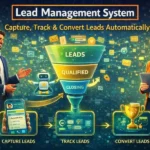
Auto Capturing, nurturing, and converting potential customer leads.

Manage AMC contracts, track service requests, ensure timely renewals.

Tracks, resolves, manages issues, and gathers customer feedback.

Manage purchases, expenses, vendors, and POs efficiently with CRM.

Manages order lifecycle from placement to delivery completion.

Generates invoices and manages sales transactions and records efficiently.

Manages stock levels, tracks items, ensures efficient inventory control.

Manages dealer workflows, assigns leads, and tracks progress centrally.

WhatsApp CRM integration with bulk messaging, auto notifications, chatbots.

IVR enabled CRM integrates click-to-call, bulk dialling, recording features.

Achieves optimum productivity of tele-sales team with auto dialler.

Updated: 26th November, 2025

If you’ve spent time in business, you’ve probably heard someone say, “We’re a B2B company” or “This strategy won’t work for B2B.” But here’s what most people don’t realize:
Understanding what B2B actually means goes far beyond knowing the acronym. It fundamentally changes how you sell, how you market, and how you build your business.
Most people conflate B2B with jargon. They think it’s just another buzzword. In reality, B2B and B2C represent two completely different sales worlds, with different rules, different buyers, and different paths to revenue.
The stakes of getting this wrong? Your sales strategy falls apart.
B2B stands for Business-to-Business. But that definition doesn’t tell you much.
Here’s what B2B actually means: You’re selling to another business, not to a consumer. The person buying from you isn’t using your product themselves. They’re buying on behalf of their company, with company money, for company purposes.
That changes everything.
When you sell to a business, you’re not selling to one person. You’re selling to a committee. You’re navigating politics, competing priorities, and multiple decision-makers who’ve never met each other. You’re dealing with budgets, procurement processes, legal reviews, and approval chains that can stretch months.
Compare this to B2C—Business-to-Consumer—where one person with their own money makes a decision in minutes or days. They like it, they buy it. Simple.
In B2B, nothing is simple.
The Sales Cycle: Why B2B Takes Forever (And That’s Actually Good News)
Let’s start with the most obvious difference: time.
In B2C, the entire sales process can happen in one shopping session. Someone walks into a store, sees a shirt, likes it, pays, leaves. Fifteen minutes start to finish.
In B2B, that same buying process can take six months. Or a year. I’ve seen deals that took two years to close.
Why the difference? Risk.
When a consumer buys a $30 shirt and hates it, they lose $30. Annoying, but life goes on. When a company buys enterprise software for $200,000 a year and it doesn’t work, they’ve wasted a quarter-million dollars. Maybe they’ve disrupted their entire operation. Maybe they’ve cost their team productivity they can’t recover.
That’s why B2B buyers move carefully. They research. They compare vendors. They run pilots. They get approvals from multiple departments. They negotiate terms. Each of these steps takes time.
Here’s the counterintuitive part: this long sales cycle isn’t a bug. It’s a feature.
Yes, it means you wait longer for deals to close. But it also means when someone finally decides to buy from you, they’re committed. They’ve done the work. They’ve thought it through. They’re not going to cancel in a week because they got bored.
In B2C, customers churn constantly. They impulsively buy, then regret it. In B2B, churn is lower because buyers took time to make sure they were making the right decision.
The Decision-Makers Problem: Why You Can’t Just Talk to One Person
This is where most B2B sales strategies fail.
In B2C, the buyer is usually one person. Maybe two if it’s a married couple buying a car. Their decision-making process is straightforward: Do I like this? Can I afford it? Yes or no?
In B2B, you’re dealing with a buying committee.
Research from Gartner shows that 77% of recent B2B purchases involved multiple stakeholders. That’s not a minority. That’s the majority. And on average, there are five to seven decision-makers involved. Sometimes more.
Each of these people has different priorities:
The Procurement Manager cares about cost, contract terms, and vendor reliability. They want to know: Is this the cheapest option? Can we trust this company? What if something goes wrong?
The CFO or Budget Holder cares about ROI and financial impact. They want spreadsheets. They want to see how this investment pays for itself. They’re asking: How long until we recoup this cost?
The end users care about whether the product actually works for them. They’re asking: Will this make my job easier? Will my team actually use this?
The CTO or technical team cares about integration, security, and technical fit. They’re asking: Will this work with our existing systems? Can we secure it?
The CEO or leadership cares about strategic alignment and competitive advantage. They’re asking: Does this move the needle for our business?
Now imagine trying to pitch to all of these people. Your CFO presentation needs ROI models. Your end-user presentation needs product walkthroughs. Your procurement person needs vendor credentials and pricing tiers. Your technical team needs architecture documentation.
You’re not giving one presentation. You’re giving five different presentations to five different people, all trying to convince them the same solution is right for their specific concern.
This is why B2B selling requires a completely different skill set. You need to be a consultant, a problem-solver, and sometimes a diplomat. You need to understand each stakeholder’s world and speak their language.
B2C buyers buy emotionally. They buy on impulse. “I saw this, I liked it, I bought it.” Marketing plays on desire, lifestyle, belonging, fear of missing out.
Think about the last time you bought something on Amazon. Did you spend three weeks researching? Probably not. You saw it, thought it looked good, clicked buy.
B2B buyers buy logically. They’re analyzing ROI, comparing vendors, looking at case studies, requesting references. They want data. They want proof. They want to know you’re not going to disappear in a year, leaving them stranded with your product.
This changes how you sell.
In B2C, you create urgency. “Limited time offer.” “Only three left in stock.” You play on emotion.
In B2B, creating fake urgency backfires. If a prospect senses you’re rushing them, they get suspicious. They think you’re hiding something. They slow down even more.
In B2B, your job is to remove friction from the decision-making process. You provide information when they need it. You answer their questions. You give them time to think. You build trust by being helpful, not pushy.
Here’s something that surprises B2B founders who came from B2C: discounts don’t work the same way.
In B2C, discounts drive sales. “30% off” gets people excited. Promotions move inventory. Price sensitivity is high because consumers are spending their own money.
In B2B, price sensitivity exists, but it’s different. The buyer isn’t using their own money. They have a budget. They’re trying to maximize ROI and solve a business problem. Price matters, but it’s not the deciding factor.
Why? Because the consequences of choosing the wrong vendor are so high. Picking the cheapest software that doesn’t actually work costs more than picking the right software at a premium price.
I’ve watched B2B sales fail repeatedly because sellers kept dropping prices. “You won’t buy at $5,000? How about $4,000? $3,000?” What they didn’t realize is that the prospect wasn’t hesitating because of price. They were hesitating because they needed buy-in from five different departments, or they weren’t convinced the solution actually solved their problem.
In those situations, a lower price doesn’t help. It makes things worse. Cheap pricing signals lower quality or desperation, neither of which builds confidence.
B2B buyers would rather pay more for something they trust than save $2,000 on something they’re unsure about.
This is the biggest strategic difference.
In B2C, once someone buys from you, the relationship is often over. You shipped them a product. Great. Their interaction with your company ends there.
In B2B, the relationship is just beginning.
You’ve closed a customer. Now you need to implement. You need to train their team. You need to ensure they’re getting value. You need to be available when they hit problems. You need to show ROI continuously. You need to find upsell and cross-sell opportunities. You need to keep them happy so they renew next year.
The cost of losing a B2B customer is enormous because they’re typically high-value. Losing a $100,000 annual customer means you need to replace $100,000 in revenue. That’s huge. In contrast, losing a $50 e-commerce customer stings less because churn is easier to replace through volume.
This is why B2B companies invest heavily in customer success, account management, and ongoing relationships. It’s not altruism. It’s economics. Keeping one customer costs less than replacing them.
B2B is the ultimate long game. You’re building partnerships, not transactions.
Because B2B deals are high-value and involve long sales cycles, B2B companies have learned to focus their efforts differently than B2C companies.
B2C marketing often relies on volume and reach. You advertise broadly, cast a wide net, and hope enough people convert. You aim for millions of impressions, knowing that small conversion rates still yield big numbers.
B2B marketing, by contrast, focuses on precision. Instead of casting a wide net to 100,000 prospects, you identify your top 50 ideal customers and focus all your resources on them.
This approach is called Account-Based Marketing (ABM). It’s not new, but it’s become essential in B2B.
The results are staggering. Companies using ABM report 38% higher sales win rates and 91% larger deal sizes. That’s not incremental improvement. That’s transformational.
Why? Because when you focus on the right accounts, you can tailor everything. Your messaging speaks directly to their pain points. Your demos showcase exactly what they need. Your case studies feature companies similar to theirs. Your outreach is personalized.
Prospects immediately sense the difference. They feel understood. They feel like you’ve done homework on their company specifically, not that they got a generic email sent to 10,000 people.
This precision costs more on a per-prospect basis, but it converts so much better that overall ROI is higher.
Because B2B sales cycles are longer and involve multiple decision-makers, the customer acquisition cost (CAC) is dramatically higher in B2B than in B2C.
In B2C, you might acquire a customer for $5-$20. You spend money on ads, some percentage of viewers click through, some buy. Done.
In B2B, you might spend $10,000 to acquire a single customer. Why? Because you need salespeople on calls having long conversations. You need to produce educational content and webinars. You need CRM systems to track all the interactions. You need to attend industry events. You need to send samples or run pilots.
The way this gets justified is through lifetime value. A B2C customer might spend $100 total over their lifetime with you. A B2B customer might spend $200,000 over five years. So spending $10,000 to acquire them makes sense.
The math changes everything. High CAC is fine if LTV (lifetime value) is high enough. This is why B2B companies can justify massive sales and marketing budgets that would bankrupt a B2C company.
“B2B is only for big companies” is a common misconception.
Not true. Any company that sells to other businesses, no matter how big or little, must follow B2B rules. A small SaaS startup that sells to small businesses is still in B2B. The dynamics stay the same. Smaller deals may speed up the process, but the basic differences stay the same.
“B2B means no creativity in marketing”
That’s also wrong. B2B marketing focuses on statistics and return on investment (ROI), but there is still a lot of potential for creativity. The top B2B organizations tell great stories, make great thought leadership content, and create brand experiences that people will remember. The difference is that creativity has a purpose beyond just looking good.
“B2B means only LinkedIn and email marketing”
True, B2B leans on LinkedIn and email. But B2B companies also use webinars, podcasts, YouTube, industry events, podcasts, partnerships, and content marketing. The channels are broader than people think.
“B2B relationships are purely transactional”
Some B2B relationships are transactional. But many of the most successful B2B companies build deep strategic partnerships. The difference is intentional. Some B2B situations call for transactional relationships (one-time purchases, commodity products). Others need strategic partnerships. Good B2B operators know which is which.
If you’re building a B2B business, here’s what actually matters:
Invest in understanding your buyer’s business. Not just the person you’re talking to, but their entire organizational structure. Who makes the decision? What’s their budget? What’s their timeline? What else is competing for their resources?
Build proof, not promises. Case studies, references, technical documentation, ROI calculators—these matter intensely. Generic claims don’t land. Proof does.
Plan for a long sales cycle. If you expect to close in 30 days and it takes 180 days, you’ll get demoralized. Budget, staffing, and planning should assume the realistic timeline.
Hire for consulting and consultative skills. Your sales team needs to ask questions, listen, and solve problems. They’re not order-takers. They’re advisors.
Create content that educates. Whitepapers, webinars, case studies, blog posts—B2B buyers spend time researching before they talk to sales. Create content that helps them understand the problem and evaluate solutions.
Track metrics differently. B2C tracks conversion rates and average order value. B2B tracks sales cycle length, customer acquisition cost, lifetime value, and win rates. You need different dashboards.
Its all about the mindset. B2B is not just a different market, its entirely a different games with its own set of rules, players and winning strategies. Where B2C is about volume, speed and immediate conversion, B2B is about precision, trust build over years and long-lasting partnerships. B2C succeeds by making impulse buying effortless, whereas B2B wins by making complex buying patterns easier and seamless. Understanding this fine difference is not just academic but critical for every B2B sales and marketing strategy.
If you understand this, you will be a able to build a business with high-value customers whom you can retain and be reliable enterprise. And if you get this wrong and use B2C tactics, you might end up wasting both time, effort and money. The choice is yours. But now you understand what’s actually at stake.
The best B2B companies don’t fight the buying process. They simplify it. They provide the information buyers need at each stage. They build trust through transparency. They prove value through evidence. And they win by being the obvious choice when the decision finally happens. And you know a CRM software is at the core of every B2B sales process and no sales can succeed without one. Contact us today to know more.

05 Mar, 2026
India’s sales landscape is changing faster than most businesses realize....

02 Mar, 2026
Here is a number that should concern every sales leader:...

28 Feb, 2026
Your customers are already on WhatsApp. With over 2 billion...
27 Feb, 2026
Every business runs on leads. But generating leads is only...

24 Feb, 2026
Sales is one of the most human-driven professions in business....