

AI Calling Agents for Sales: Use Cases, Benefits and How…
22 Oct, 2026
Summary (TL;DR) AI calling agents help businesses engage prospects, qualify...
Updated: 5th October, 2026
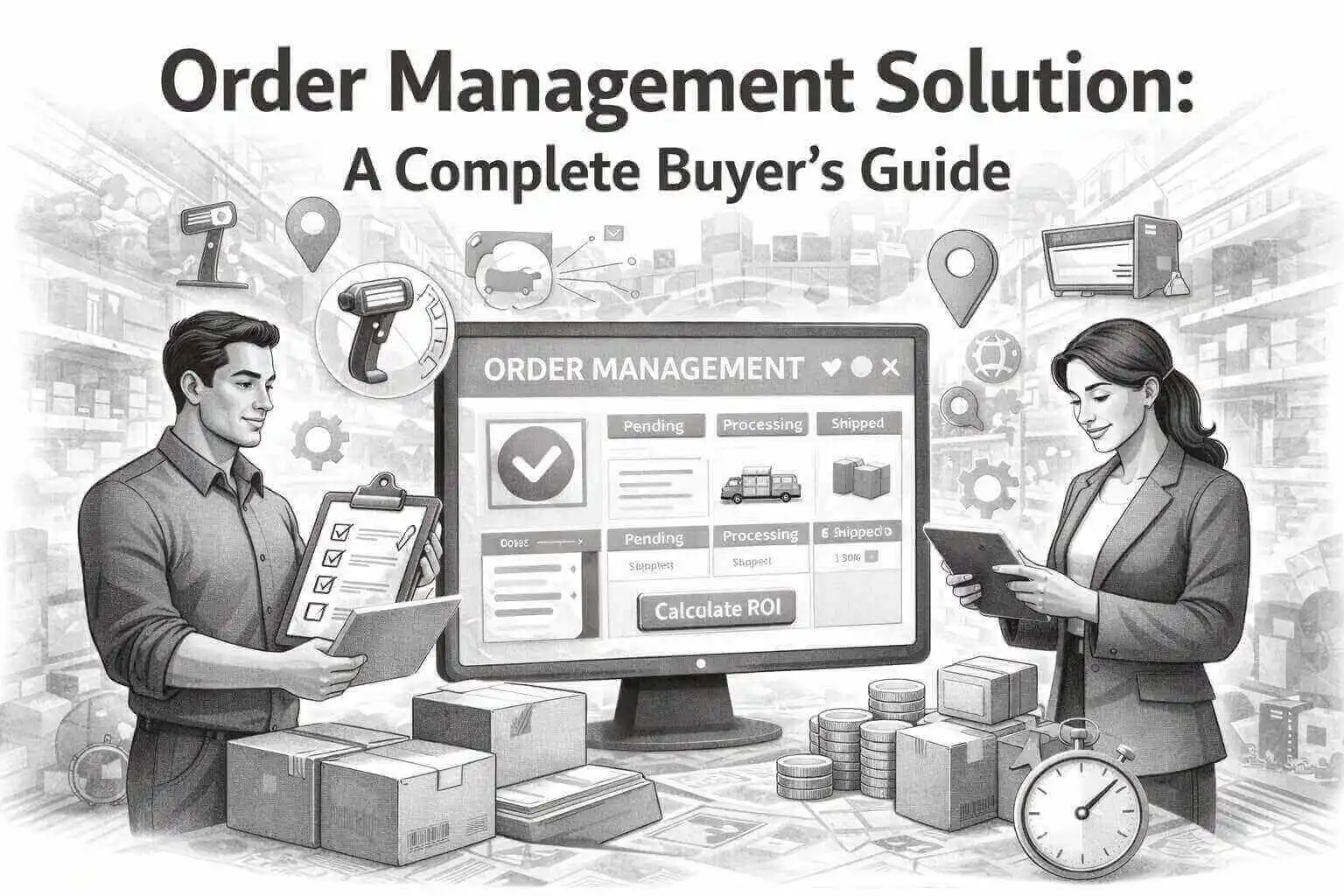
At the beginning, managing orders feels easy. A few customers, a few orders, maybe one Excel sheet—and things work. But once orders start increasing, problems quietly show up. Someone forgets to update stock, an order gets delayed, or a customer keeps asking, “What’s the status?” That’s usually the point where businesses realise their order process isn’t as smooth as they thought.
An order management solution exists exactly for this reason. Not to complicate things, but to bring some control when orders start piling up.
In simple terms, an order management solution helps you keep track of orders from start to finish. From the moment an order is created to the time it is delivered, everything stays in one system. No jumping between emails, WhatsApp messages, spreadsheets, and calls.
Instead of guessing what’s happening with an order, you can actually see it.
Manual processes work only up to a point. After that, they start slowing the business down. Teams waste time searching for order details, confirming inventory, or fixing small mistakes that shouldn’t have happened in the first place.
Some common issues businesses face are:
These problems don’t mean the team is careless. They just mean the system isn’t built to handle growth.
When choosing an order management solution, fancy features don’t matter as much as practical ones.
Clear order visibility is important. You should be able to quickly check whether an order is pending, confirmed, shipped, or delivered.
Inventory tracking helps avoid embarrassing situations like selling something that’s already out of stock.
Custom order stages are useful because no two businesses work exactly the same way. Flexibility matters.
Automatic invoicing saves time and reduces silly errors that happen with manual billing.
And finally, basic reports help you understand where delays happen and how orders usually flow.
Most businesses today prefer cloud-based order management systems, and for good reason. You don’t need heavy setup, and your team can access data from anywhere. Updates happen automatically, and scaling up doesn’t feel scary.
On-premise systems still exist, but for many growing businesses, they feel heavy and restrictive.
Not at all. In fact, smaller teams often benefit more. When resources are limited, even small inefficiencies hurt. An order management solution helps small and mid-sized businesses stay organised without adding extra workload.
If your team spends more time managing orders than fulfilling them, that’s a clear sign something needs to change.
Before buying anything, pause and think. Ask yourself if the system feels easy to use. If your team avoids it, it won’t help. Check whether it fits your existing workflow instead of forcing you to change everything overnight.
Also, think long-term. The right solution should grow with your business, not slow it down later.
An order management solution isn’t about control—it’s about clarity. When orders are organised, teams work with less stress, customers get better updates, and businesses run more smoothly. Growth becomes manageable instead of chaotic.
If handling orders is starting to feel messy, it might be time to simplify things. Groweon’s Order Management Solution helps businesses manage orders, inventory, and invoices from one place—without unnecessary complexity. It’s built to support growing teams that want clarity, not confusion.
If order tracking feels confusing or time-consuming, the answer is probably yes.
Yes. Most modern solutions are designed to be simple and don’t require technical expertise.
Having everything in one system reduces manual mistakes significantly.
A good solution is built to handle growth without changing systems again.

22 Oct, 2026
Summary (TL;DR) AI calling agents help businesses engage prospects, qualify...
22 Oct, 2026
Summary (TL;DR) A delayed quotation can cost a business a...

21 Oct, 2026
Summary (TL;DR): AI CRM is changing how businesses capture, qualify...

21 Oct, 2026
Summary (TL;DR): AI CRM is transforming how businesses engage customers...

21 Oct, 2026
Summary (TL;DR): Businesses are moving beyond AI tools that simply...