

How Businesses Can Use QR Codes to Improve Customer Engagement
26 Oct, 2026
It’s easier to scan a QR code than to type...
Updated: 5th October, 2026
Most people think sales problems are about leads.
“Leads kam aa rahe hain.”
“Marketing kaam nahi kar rahi.”
But in reality, a lot of businesses already have leads. The real issue is what happens after the lead comes in.
Someone fills a form. Someone sends a WhatsApp message. Someone calls once. Then… silence. No follow-up. No proper tracking. No clear next step. Slowly, that lead just disappears.
This is exactly why the sales funnel matters.
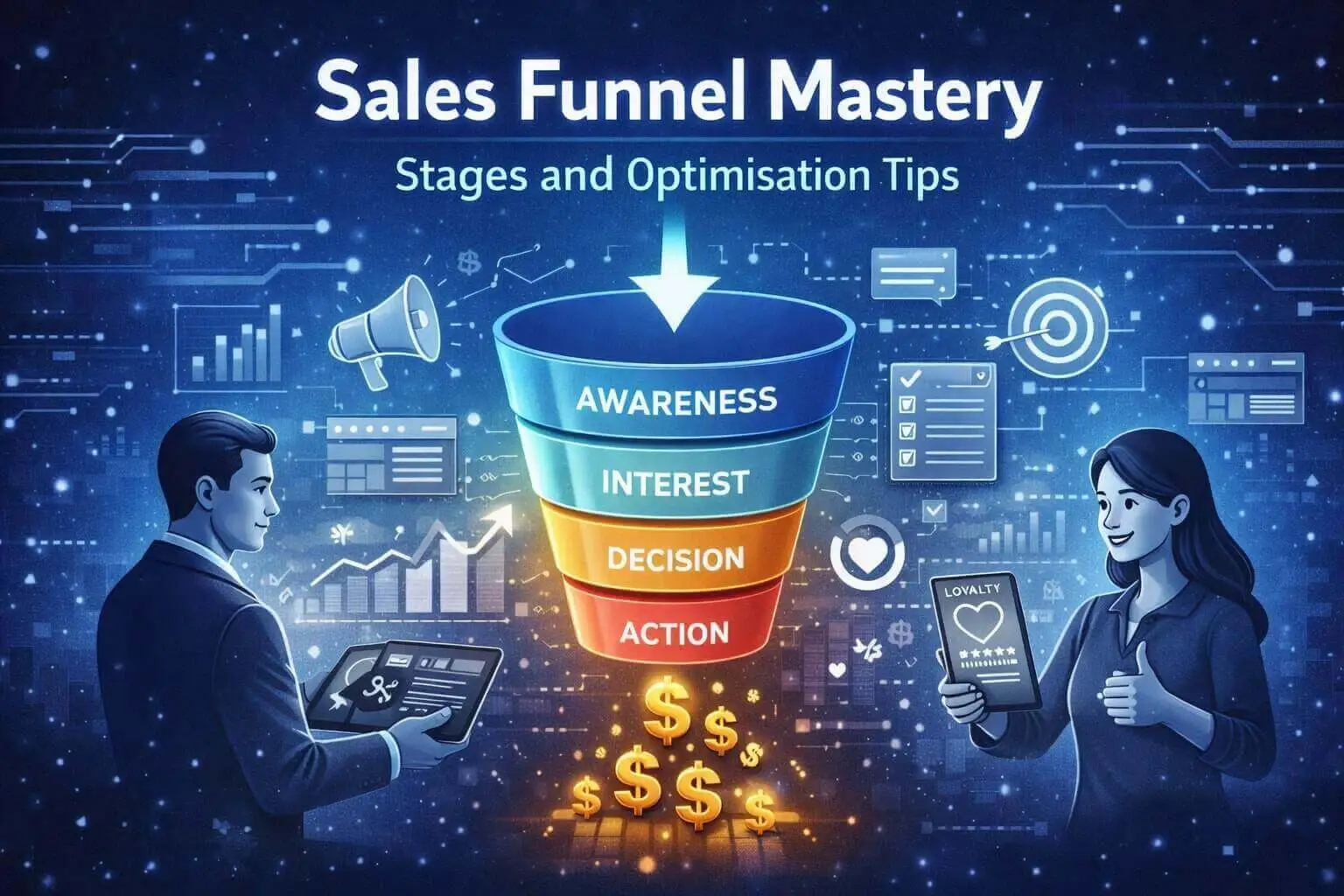
A sales funnel is not a theory. It’s the actual path a customer takes while deciding whether to trust you or not. And when this path is managed using CRM software, sales stop feeling random and start becoming predictable.
Let’s talk about the real stages of a sales funnel and how CRM helps at each step — practically, not ideally.
This is the stage where someone comes across your business for the first time. It could be through Google search, Instagram, Facebook ads, your website, or even a reference.
At this point, the person is not thinking about buying. They’re just noticing you.
Here’s where most businesses mess up:
leads come from everywhere, but they’re stored nowhere properly.
Some are in WhatsApp. Some are in Excel. Some are with one salesperson. Some are just forgotten.
A CRM system fixes this basic but serious problem. Every lead gets captured in one place. You know where it came from, when it came, and who should handle it.
This alone improves your sales funnel more than most people realise.
Once a lead shows interest, timing becomes everything.
If you reply late, interest drops.
If you reply without context, trust drops.
CRM helps here by assigning leads instantly and keeping the entire conversation history in one place. The salesperson doesn’t have to ask, “Sir, aapne pehle baat ki thi?” — they already know.
Follow-ups also become structured. Not aggressive. Just timely. A reminder to call. A message when needed. Nothing fancy, just consistent.
This stage is where CRM quietly saves deals without making noise.
This is the most sensitive stage of the sales funnel.
The lead is interested, but also confused. They’re comparing you with others. They’re thinking about price, value, support, and reliability.
If your sales team forgets to follow up here, the lead doesn’t complain. They just move on.
CRM pipeline management makes sure this doesn’t happen. You can clearly see:
Notes from calls, shared quotations, objections — everything stays recorded. No dependence on memory. No “I think I already called”.
This clarity builds confidence, both for the sales team and the customer.
Closing a deal shouldn’t feel like a struggle. But without CRM, it often does.
Pricing discussions scattered on WhatsApp, approvals delayed, follow-ups missed — all of this slows down conversion.
CRM brings structure here. Quotations, deal values, negotiation stages — everything is visible. Sales managers know where to step in. Sales executives know what to do next.
When your funnel reaches this stage smoothly, conversions don’t feel forced. They feel natural.
Most businesses stop thinking once the sale is done.
But customers don’t disappear after buying. They remember how you treat them after payment.
CRM helps you track customers, service requests, feedback, and future opportunities. It ensures that customers don’t feel ignored once the deal is closed.
Retention doesn’t require fancy strategies. It requires remembering people — and CRM does that job well.
Without CRM, a sales funnel is just an idea.
With CRM, it becomes a working system.
CRM software helps you:
This structure is what allows businesses to grow without losing control.
If your business faces issues like:
Then the problem is not effort — it’s organisation.
CRM doesn’t magically increase sales. It simply removes the mess that blocks sales.
Sales funnel mastery is not about pressure tactics or aggressive selling. It’s about guiding people properly at every step. When your process is clear, customers feel it. When your follow-ups are timely, trust builds automatically.
CRM doesn’t replace human sales skills. It supports them.
And when sales funnel and CRM work together, growth becomes steady instead of stressful.
Groweon CRM helps businesses manage their complete sales funnel — from lead capture to conversion and long-term customer management. With organised lead management, smart sales pipelines, automation, and complete visibility, Groweon helps sales teams stay focused and consistent.
👉 Choose Groweon CRM and turn scattered leads into structured sales growth
Think of a sales funnel as the journey a customer goes through before buying from you. It starts when someone first hears about your business and ends when they finally trust you enough to make a purchase.
This usually happens because follow-ups are late, messages lack context, or no one is clearly responsible for the lead. Most leads don’t say “no” — they just slowly disappear.
CRM keeps everything in one place — lead details, conversations, follow-ups, and deal status. So the sales team doesn’t have to rely on memory or scattered messages. They know exactly what to do next.
Not at all. In fact, small teams benefit the most. CRM helps them stay organised, avoid mistakes, and look professional without adding extra workload.
Yes, and this part is often ignored. CRM helps track customers even after sales — for support, feedback, repeat business, and long-term relationships. Customers remember how you treat them after payment.

26 Oct, 2026
It’s easier to scan a QR code than to type...

26 Oct, 2026
Summary FMCG CRM Software connects field sales teams, distributors, retailers...

26 Oct, 2026
A supplier emails you a price sheet. But there is...

26 Oct, 2026
Summary Choose CRM Software according to your sales process, business...

23 Oct, 2026
Summary Compare 10 field service and field workforce software options...