

Sales Follow-Up Automation: How to Never Miss a Potential Customer
23 Nov, 2026
Summary Every sales enquiry deserves timely attention, but manual follow-ups...
Updated: 23rd November, 2026
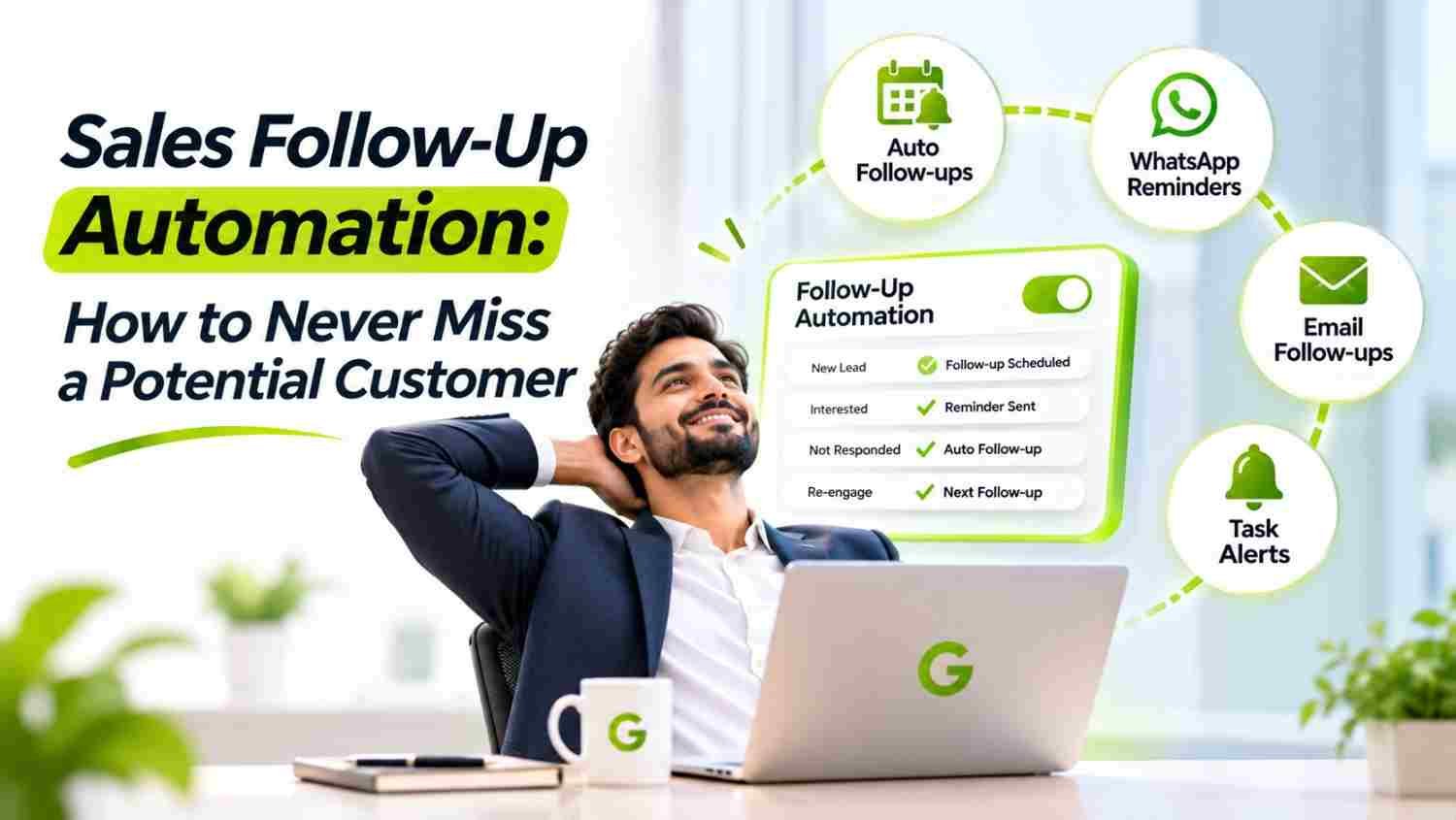
Every sales enquiry deserves timely attention, but manual follow-ups often leave potential customers waiting.
Missed calls, delayed messages and inconsistent communication can slow down the buying journey.
Sales follow-up automation helps businesses engage prospects through structured, timely and relevant interactions.
With AION Autopilot, businesses can use AI calling, WhatsApp conversations and automated workflows to keep sales moving.
A potential customer submits an enquiry, your sales team receives a notification, and someone plans to call them back. But before the representative gets a chance to respond, another meeting starts, more enquiries arrive, and the original lead gets pushed down the priority list.
This situation is common in businesses that manage multiple enquiries every day. Even when customers show genuine interest, inconsistent communication can create unnecessary gaps in the sales process.
The challenge becomes bigger when sales teams handle leads from websites, advertising campaigns, phone calls, marketplaces and WhatsApp simultaneously.
This is where Sales Follow-Up Automation becomes important. It helps businesses create a consistent process for contacting prospects, responding to their questions, qualifying their requirements and keeping conversations active.
Instead of depending entirely on manual reminders and individual memory, businesses can use AI-powered systems such as AION Autopilot by Groweon to automate important sales engagement activities.
Many sales teams still depend on spreadsheets, personal calendars and manual calling lists to manage customer interactions. These methods may work when enquiry volumes are low, but they become difficult to maintain as businesses grow.
Some common challenges include:
A structured sales follow-up process helps businesses organise customer interactions and maintain communication throughout the buying journey.
Businesses can also use CRM lead management to keep customer information, activities and follow-up requirements connected.
The first interaction can influence whether a prospect continues the conversation with your business.
When a customer submits an enquiry, they may also be contacting other providers. Waiting too long to respond creates an opportunity for competitors to engage them first.
A well-designed lead response strategy helps businesses prioritise incoming enquiries and reduce unnecessary delays.
With AION Autopilot, businesses can configure an AI Calling Agent to initiate calls when new leads enter the connected Groweon CRM. This allows prospects to receive an initial interaction without waiting for a sales representative to manually check every enquiry.
The system can also initiate WhatsApp engagement through its AI-powered communication capabilities, depending on the configured workflow.
A prospect may not answer the first call or respond to the initial message. That does not automatically mean they are uninterested.
They may be travelling, attending a meeting or simply unavailable at that moment.
Businesses need a structured follow-up sequence that defines when and how to reconnect. For example:
| Stage | Follow-Up Activity |
|---|---|
| First interaction | Initial AI call or WhatsApp engagement |
| No response | Schedule another contact attempt |
| Prospect responds | Continue the conversation and understand requirements |
| Interest identified | Qualify the lead and notify the sales representative |
| Further consideration | Continue relevant follow-ups based on configured rules |
A thoughtful follow-up sequence makes communication more organised.
AION Autopilot supports automated calling, WhatsApp engagement and custom automation workflows. Businesses can configure actions based on lead activity, status and other relevant conditions.
Customers often prefer messaging because it allows them to respond at a convenient time. For businesses in India, WhatsApp is an important customer communication channel.
However, manually responding to every incoming message can become difficult when enquiry volumes increase.
The WhatsApp Business Platform provides tools for business communication, while its business messaging policies explain the requirements for using the platform.
AION Autopilot includes a WhatsApp AI Chatbot that can respond to customer enquiries, understand requirements and support lead qualification through conversations.
This makes it easier for businesses to maintain engagement when sales representatives are occupied with other activities.
Not every enquiry requires the same level of sales attention.
A prospect looking for an immediate purchase may need a quick conversation with a salesperson. Someone who is still researching may require additional information and nurturing.
Without a proper qualification process, sales representatives can spend too much time understanding basic requirements manually.
A structured lead qualification process helps businesses identify prospects based on factors such as interest, requirements, budget and purchase timeline.
AION Autopilot uses AI-driven lead qualification to understand customer responses and identify potential sales opportunities. Qualified leads can then be brought to the attention of the appropriate sales representatives.
Sales representatives often spend a large part of their day making initial calls, checking responses and sending routine messages.
Although these activities are important, handling every interaction manually can reduce the time available for negotiations and deal closing.
Sales teams can use sales automation to reduce repetitive administrative work and create more consistent processes.
AION Autopilot supports AI calling, automated follow-ups and bulk calling workflows. This allows businesses to manage repetitive engagement activities through configured AI workflows rather than relying entirely on manual dialling.
The human sales team can then concentrate on conversations that require product knowledge, negotiation and relationship building.
A follow-up becomes frustrating when customers have to repeat information they have already shared.
For example, a prospect may have discussed pricing during an earlier call but receive another message asking about their basic requirements.
This usually happens when communication records are scattered across different tools.
A connected CRM system helps businesses maintain customer information and sales activity records in one place.
AION Autopilot operates within Groweon’s CRM environment, connecting AI-driven engagement with lead records and sales workflows. This helps representatives access relevant interaction information when they take over a conversation.
Automating follow-ups is only one part of improving sales performance. Businesses must also understand whether their processes are working.
Sales managers should regularly review:
Using Google Analytics 4, businesses can also understand how visitors interact with their websites and measure important marketing activities.
Google provides conversion measurement through its analytics and advertising tools, helping businesses connect marketing activity with valuable actions.
AION Autopilot’s Smart Dashboard provides visibility into AI-driven engagement and automation activities, helping managers monitor their sales workflows.
The difference between manual and automated follow-ups is not simply about speed. It is also about consistency, visibility and the ability to handle larger enquiry volumes.
| Parameter | Manual Follow-Ups | AI-Powered Follow-Ups |
|---|---|---|
| Initial engagement | Depends on representative availability | Can be triggered automatically |
| Calling | Manual dialling | AI Calling Agent |
| WhatsApp communication | Manually written messages | AI-powered conversations |
| Lead qualification | Handled by sales representatives | Supported by AI interactions |
| Follow-up scheduling | Depends on reminders and tasks | Configured automated workflows |
| Lead visibility | Depends on manual updates | Connected CRM activity records |
| Scalability | Limited by available team capacity | Supports automated engagement at scale |
Businesses should choose an approach that combines automation with human involvement. AI can manage repetitive engagement, while sales representatives remain responsible for complex discussions, negotiation and closing.
AION Autopilot by Groweon is designed to help businesses manage lead engagement through AI-powered actions inside their CRM.
Instead of waiting for sales representatives to manually initiate every interaction, businesses can configure workflows that respond to lead activity.
Here is how the process can work:
Step 1: Capture the Lead
A new enquiry enters Groweon CRM through a connected source such as a website, Meta Ads or another integrated channel.
Step 2: Initiate Engagement
AION can trigger an AI Calling Agent or WhatsApp interaction according to the configured workflow.
Step 3: Understand Customer Requirements
The AI agent engages the prospect and asks relevant questions to understand their needs and purchase intent.
Step 4: Qualify the Opportunity
AION supports lead qualification and identifies prospects who meet the business’s defined criteria.
Step 5: Continue Automated Follow-Ups
If a prospect needs more time, configured workflows can maintain communication through calls or WhatsApp.
Step 6: Alert the Sales Representative
When a lead becomes sales-ready, AION can notify the appropriate representative so that the human team can take the conversation forward.
You can explore the AION Autopilot platform to understand how these AI-powered capabilities work together.
Automation works best when businesses have a clear understanding of their sales process. Simply enabling automated messages without defining customer journeys can create unnecessary communication.
Consider these practices before implementing an automated follow-up system:
Businesses can also refer to Google’s measurement guidance to understand how to evaluate their digital marketing performance.
For WhatsApp communication, it is important to follow the platform guidelines and use approved communication practices.
A missed follow-up may look like a small operational issue, but repeated delays can create significant gaps in the sales process.
Businesses need a system that responds to incoming enquiries, maintains communication and identifies prospects who are ready for a sales conversation.
Sales Follow-Up Automation makes this process more organised by reducing dependency on manual calling, reminders and repetitive messaging.
With AION Autopilot, businesses can use AI Calling, WhatsApp AI Chatbot, lead qualification and custom automation to support their sales engagement process.
Let AI handle repetitive follow-ups while your sales team focuses on building relationships and closing deals.
Explore Groweon AION Autopilot and see how AI-powered sales automation can help your business manage every enquiry more effectively.
Sales follow-up automation is the use of software, CRM workflows and AI-powered tools to manage customer communication after an enquiry. It can include automated calls, messages, reminders, qualification and lead engagement.
Follow-ups help businesses maintain communication with prospects who may need more information or time before making a purchase. Consistent engagement helps prevent interested customers from being overlooked.
AI can initiate calls, respond to customer messages, ask qualification questions and trigger follow-up workflows based on configured conditions. This reduces the amount of repetitive work handled manually by sales representatives.
Yes. AION Autopilot includes an AI Calling Agent that can initiate calls when new leads enter the connected Groweon CRM, according to the configured workflow.
Yes. Businesses can use WhatsApp Business Platform-based integrations and AI-powered chatbots to support customer conversations, respond to enquiries and maintain communication, subject to applicable platform policies.
No. Automation can handle repetitive engagement and qualification activities. Sales representatives remain important for understanding complex requirements, building relationships, negotiating and closing deals.
Businesses can monitor first-response time, contact rate, customer replies, qualified leads, appointments and conversion rates. CRM dashboards and analytics tools help managers evaluate these activities.
CRM reminders generally notify representatives when an action is due. AI-powered follow-ups can go further by initiating configured calls or conversations, understanding responses and supporting lead qualification.

23 Nov, 2026
Summary Every sales enquiry deserves timely attention, but manual follow-ups...

23 Nov, 2026
Summary Businesses receive enquiries throughout the day, but manually calling...

23 Nov, 2026
Summary Sales growth does not always require a larger sales...

20 Nov, 2026
Summary AI Calling CRM software helps businesses automate customer...

20 Nov, 2026
Summary Slow responses, inconsistent follow-ups and manual lead qualification...