

Best CRM for Rubber and Tyre Manufacturers
16 Oct, 2026
Summary (TL;DR) The best CRM for rubber and tyre manufacturers...
Updated: 5th October, 2026
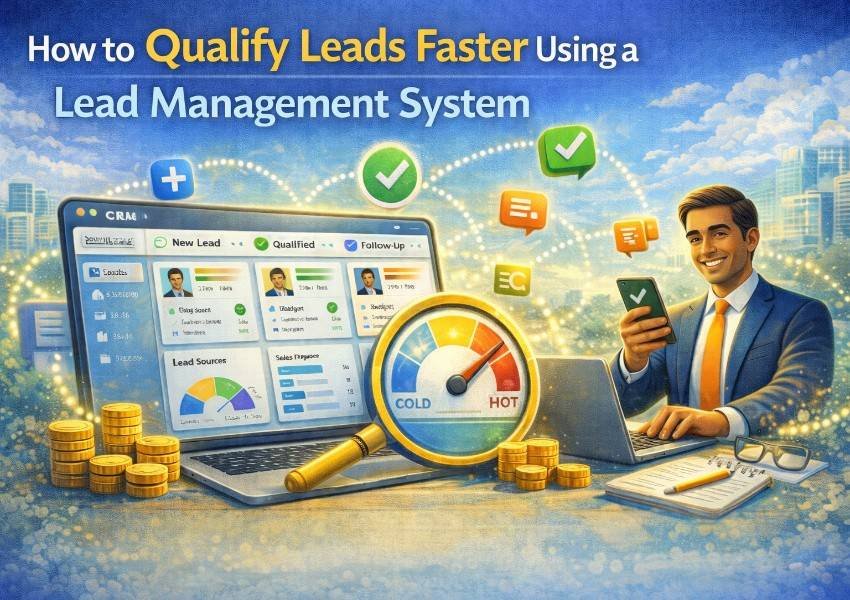
Let’s be honest. Not every lead is worth your time.
That sounds obvious, but most business owners spend a surprising amount of their week doing exactly that: chasing people who were never going to buy, following up on cold contacts out of habit, and treating every enquiry like it deserves the same attention. It is exhausting, and it is one of the quieter reasons pipelines feel busier than they actually are.
The fix is not working harder. It is qualifying faster. And the right lead management system is what makes that possible without adding more work to your plate.
Most small and mid-sized businesses do not have a qualification problem exactly. They have a process problem.
Leads come in from multiple places: a website form, a WhatsApp message, a referral, a trade show conversation. They land in different places, get picked up at different speeds, and are followed up on inconsistently depending on who is available that day. By the time someone actually assesses whether a lead is worth pursuing, the moment has often passed.
And when there is no clear system for deciding what a good lead looks like, everyone ends up winging it. One rep chases every single enquiry to the end. Another filters based on gut feel. Neither approach scales, and both burn time that could go towards deals that are actually ready to move.
According to research published by HubSpot, companies that have a defined lead qualification process in place close deals at a significantly higher rate than those that do not. That gap does not come from having better leads. It comes from knowing which ones to prioritise.
A lead management system is essentially a centralized place where every lead gets captured, tracked, scored, and moved through a defined process. Instead of relying on spreadsheets, memory, or whoever happens to check their inbox first, the system handles the structure.
At a basic level it does a few things consistently. It captures leads from every channel in one place, so nothing falls through the cracks. It tracks every interaction, so you always know where a lead stands and what has already been said. It scores or ranks leads based on criteria you define, so your team knows who to call first. And it automates the repetitive touchpoints, like initial responses, follow-up reminders, and status updates, so the manual admin does not pile up.
That last part matters more than most people realise. A lot of lead qualification is not about making decisions. It is about doing the same small tasks over and over across a hundred different contacts. A lead management system takes that off your plate so the decisions a human actually needs to make get more attention.
Speed matters in lead qualification, but not in the way people usually think. It is not about rushing through a conversation. It is about getting to the right information quickly so you can make a confident call.
The most practical framework most sales teams use comes down to four questions. Does this person have a genuine need for what you offer? Not a vague interest, an actual problem your product or service solves. Do they have the budget to actually buy? A lead management system helps here by tracking signals like company size, industry, and past behaviour that give you a sense of buying capacity before you even get on a call. Are they the right person to be talking to? A lot of sales time gets lost in conversations with people who are interested but not the ones who make the decision. And is the timing right? Some leads are genuinely interested but not ready to move for three months, which is fine, but they should be nurtured differently than someone who wants to move this week.
A good lead management system captures this information as it comes in and uses it to rank leads automatically. You do not have to go digging through notes to remember where someone stands.
Once you have your qualification criteria set, the system starts doing a lot of the work that used to fall on individuals.
Rather than manually reviewing every new enquiry, the system assigns a score based on the data it has. A lead from a company that matches your ideal profile, who visited your pricing page twice and filled in a contact form, ranks higher than someone who downloaded a generic guide six months ago. Your team sees the ranked list and starts at the top.
Studies consistently show that the odds of qualifying a lead drop dramatically after the first hour. A lead management system can trigger an immediate automated response the moment an enquiry comes in, so the lead knows they have been received while a rep prepares to follow up properly.
When a rep picks up a lead, they can see every touchpoint: what pages were visited, what emails were opened, what was said in previous conversations. That context makes the first real conversation much more targeted and a lot less awkward.
One of the most common reasons leads go cold is simple: nobody followed up at the right time. A lead management system removes that variable by scheduling follow-ups automatically based on where the lead sits in the process.
Say you run a B2B services business with a small sales team. Leads come in through your website, through referrals, and occasionally through social media. Right now your process is roughly: someone checks the inbox, passes details to a rep in a WhatsApp message, and the rep follows up when they get a chance.
That works until it does not. A busy week means a lead waits three days for a response. Two reps end up calling the same person. Nobody is sure who last spoke to which contact or what was said.
With a lead management system in place, every lead lands in one view regardless of source. It gets scored automatically based on company type, enquiry detail, and engagement. The rep with the right territory or product knowledge gets assigned immediately. A response goes out within minutes. And the follow-up sequence runs on a schedule until the lead either converts or is disqualified.
The team does the same amount of work. They just do it on the right leads, at the right time, with the right information in front of them.
Tools like Groweon CRM are built with exactly this kind of workflow in mind, particularly for growing businesses that need proper lead management without the complexity of an enterprise system. The lead tracking, scoring, and follow-up automation are all built in, so you are not stitching together five different tools to get a basic process working.
Not every lead needs the same follow-up sequence. Someone who has already visited your pricing page three times needs a different conversation than someone who clicked a general ad once. Segmenting leads by intent level makes a real difference to conversion.
Qualifying leads faster also means being quicker to disqualify. If a lead clearly does not fit, marking them as such and moving on is not giving up. It is protecting your team’s time for the leads that actually have potential.
A lead management system generates a lot of useful information about where leads are coming from, which ones convert, and where they tend to drop off. Most businesses set the system up and then never look at that data. A monthly review of what is working and what is not makes the whole process sharper over time.
You do not need to build the perfect system on day one.
Start by picking one or two lead sources and getting those into a central system. Define what a qualified lead looks like for your business using the four questions above. Set up basic automated responses so leads are acknowledged immediately. Assign leads to specific people with clear ownership. And track what happens to each lead so you can start seeing patterns.
Once that is running smoothly, layer in lead scoring, more detailed segmentation, and multi-step follow-up sequences. The businesses that get the most out of lead management systems are usually the ones that build gradually rather than trying to automate everything at once.
Qualifying leads faster is not really about speed for its own sake. It is about making better decisions with the time your team already has. Most businesses are sitting on more opportunity than they realise, they just cannot see it clearly because the process is too noisy.
A lead management system cuts through that noise. It brings structure to something that is usually held together with habit and hope, and it gives your team the visibility to focus where it actually counts.
The leads are there. The question is whether your system is helping you find the right ones before someone else does.
Book a quick free demo with India’s AI-powered lead management system!
It is a tool that captures, tracks, scores, and manages leads from the moment they come in until they either convert or are disqualified. It keeps everything in one place and automates the repetitive parts of the process.
It scores leads automatically based on criteria you set, triggers immediate responses when enquiries come in, and gives your team a ranked view of who to contact first. Less time spent deciding, more time spent selling.
If you are getting more than a handful of leads a week and managing them on spreadsheets or in your inbox, yes. The cost of a missed or slow follow-up adds up quickly, and a basic system fixes that without a huge investment.
Generally: they have a genuine need, the budget to buy, the authority to make a decision, and reasonable timing. Any lead management system worth using will let you build those criteria into your scoring.
A basic setup, capturing leads, assigning them, and automating initial responses, can be done in a day or two. A more refined system with scoring and segmentation takes a few weeks to dial in properly, but you start seeing value well before it is perfect.

16 Oct, 2026
Summary (TL;DR) The best CRM for rubber and tyre manufacturers...

16 Oct, 2026
Summary (TL;DR) A CRM for agricultural equipment manufacturers tracks farmer...

16 Oct, 2026
Summary (TL;DR) The best CRM for paint and coatings manufacturers...

15 Oct, 2026
Summary (TL;DR) A CRM for cement and building material manufacturers...

15 Oct, 2026
Summary (TL;DR) A CRM for pharma API and bulk drug...